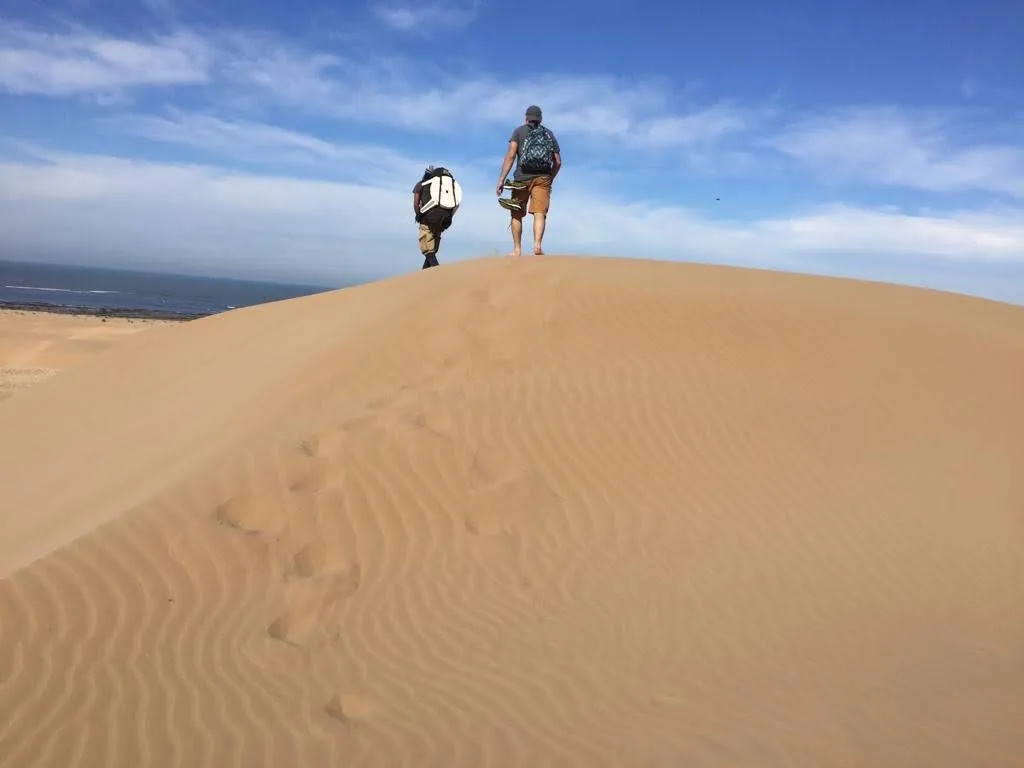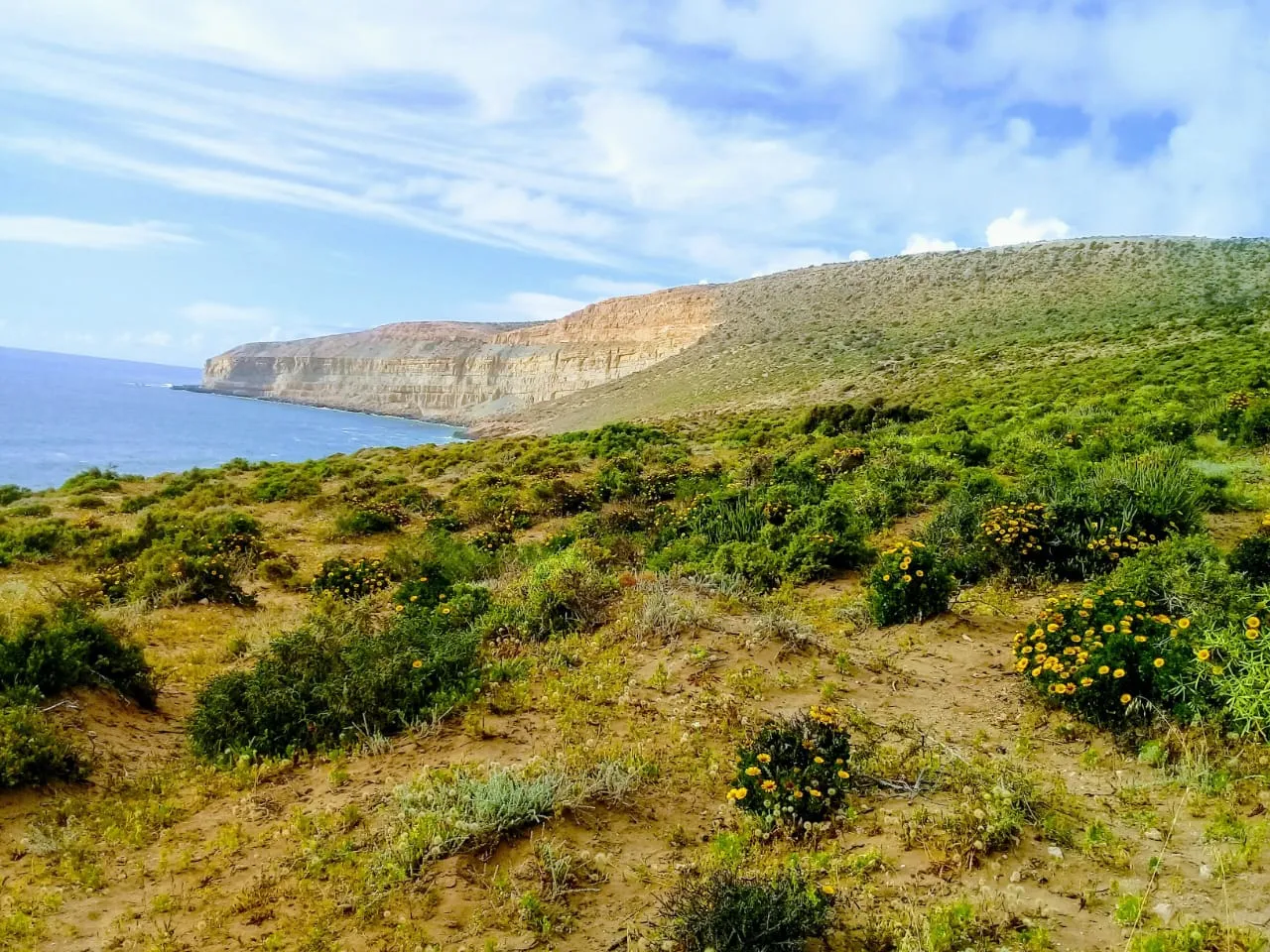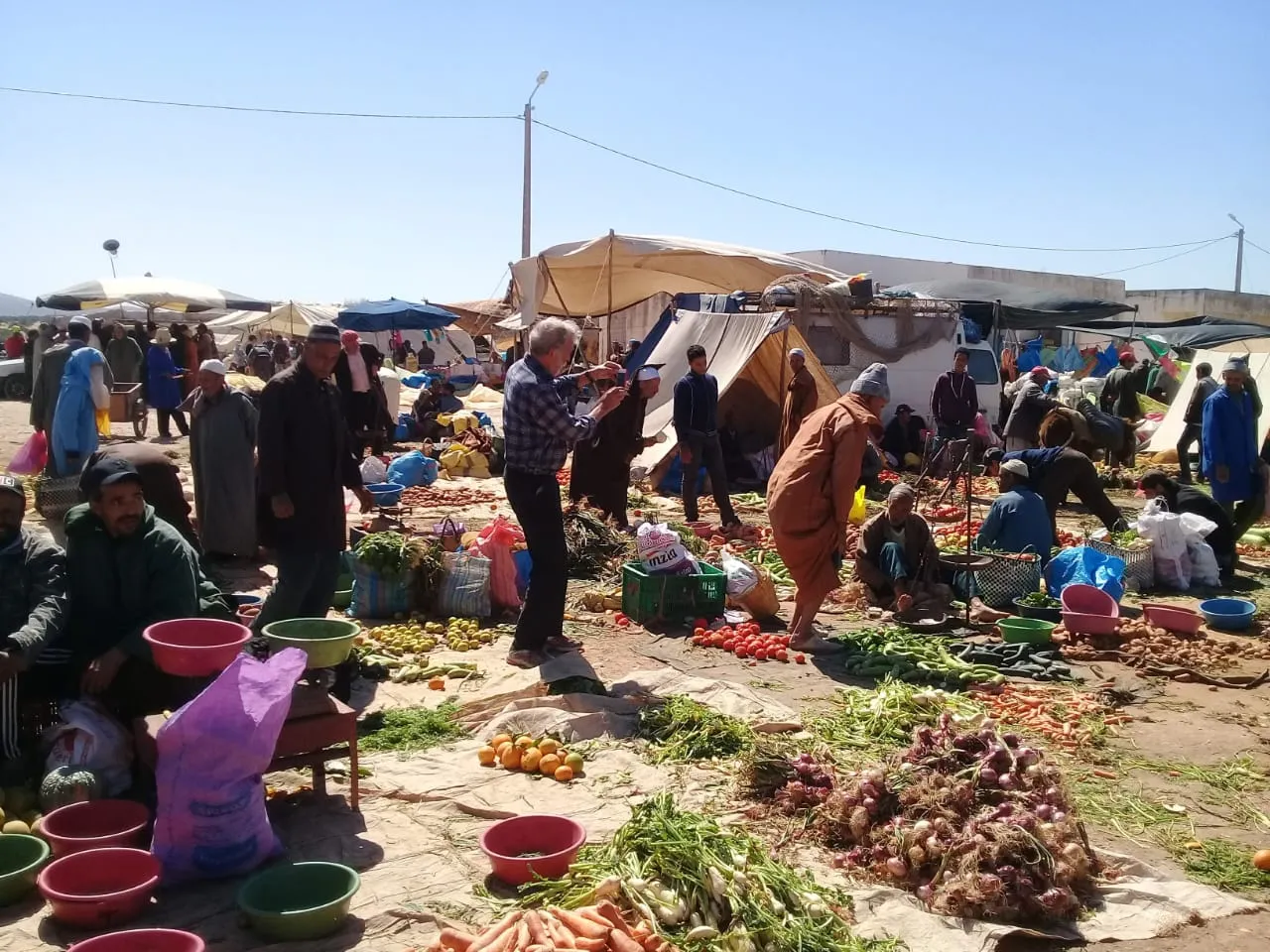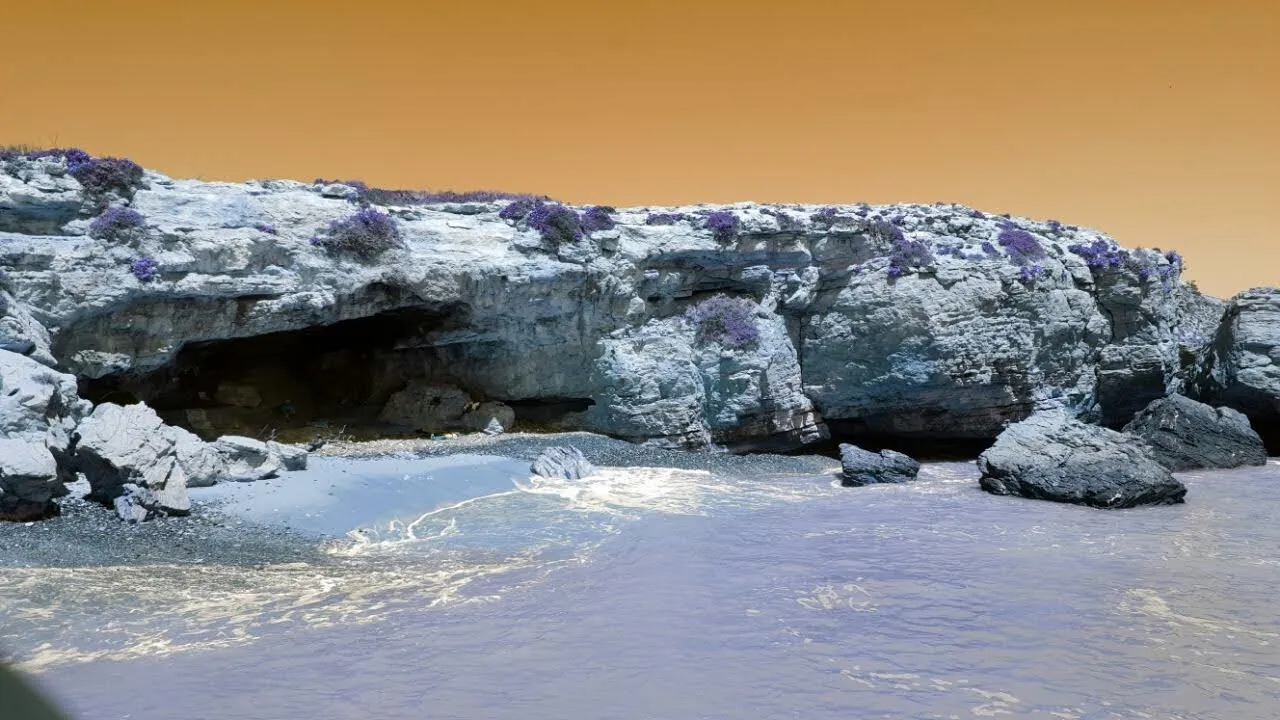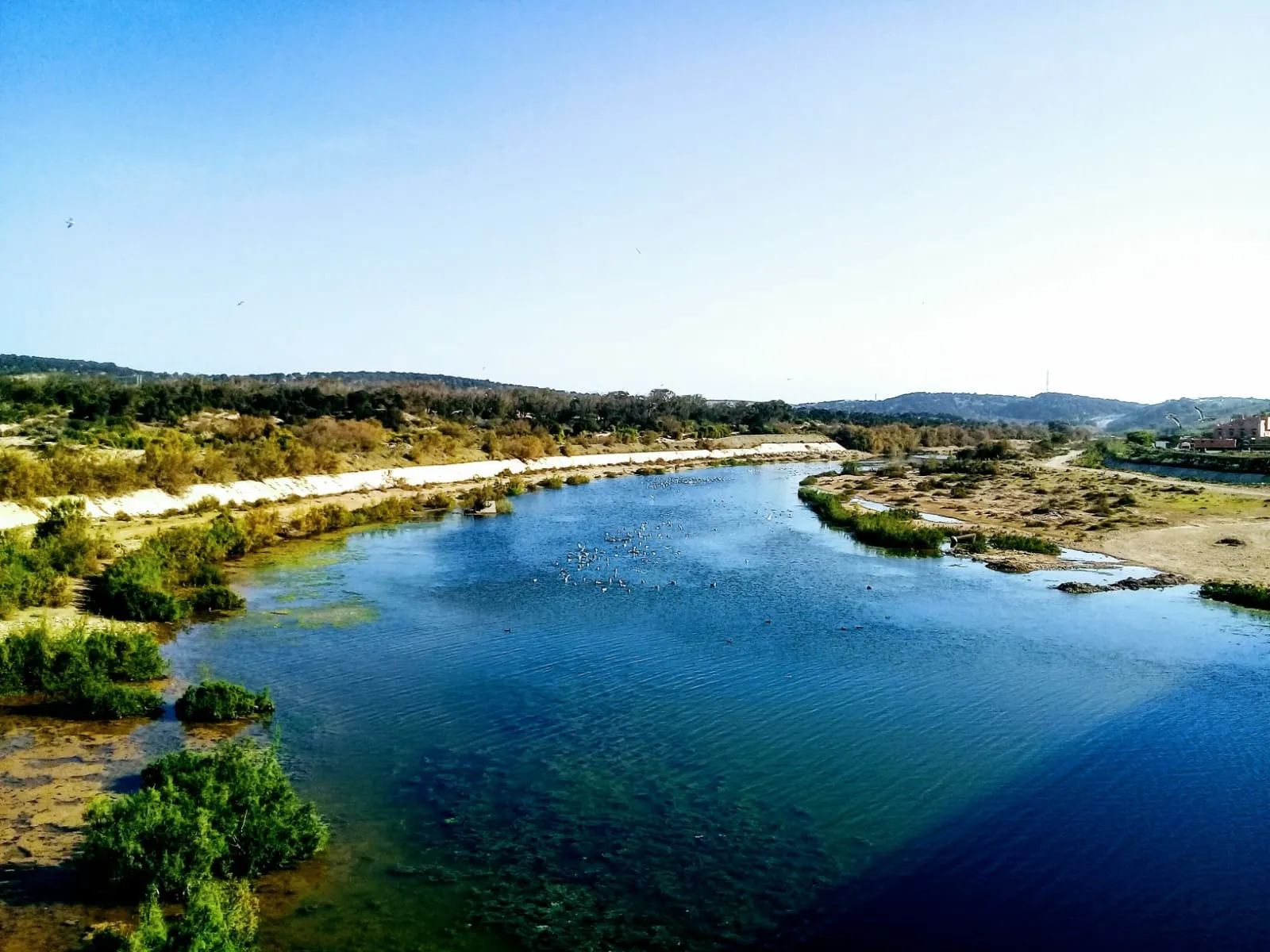


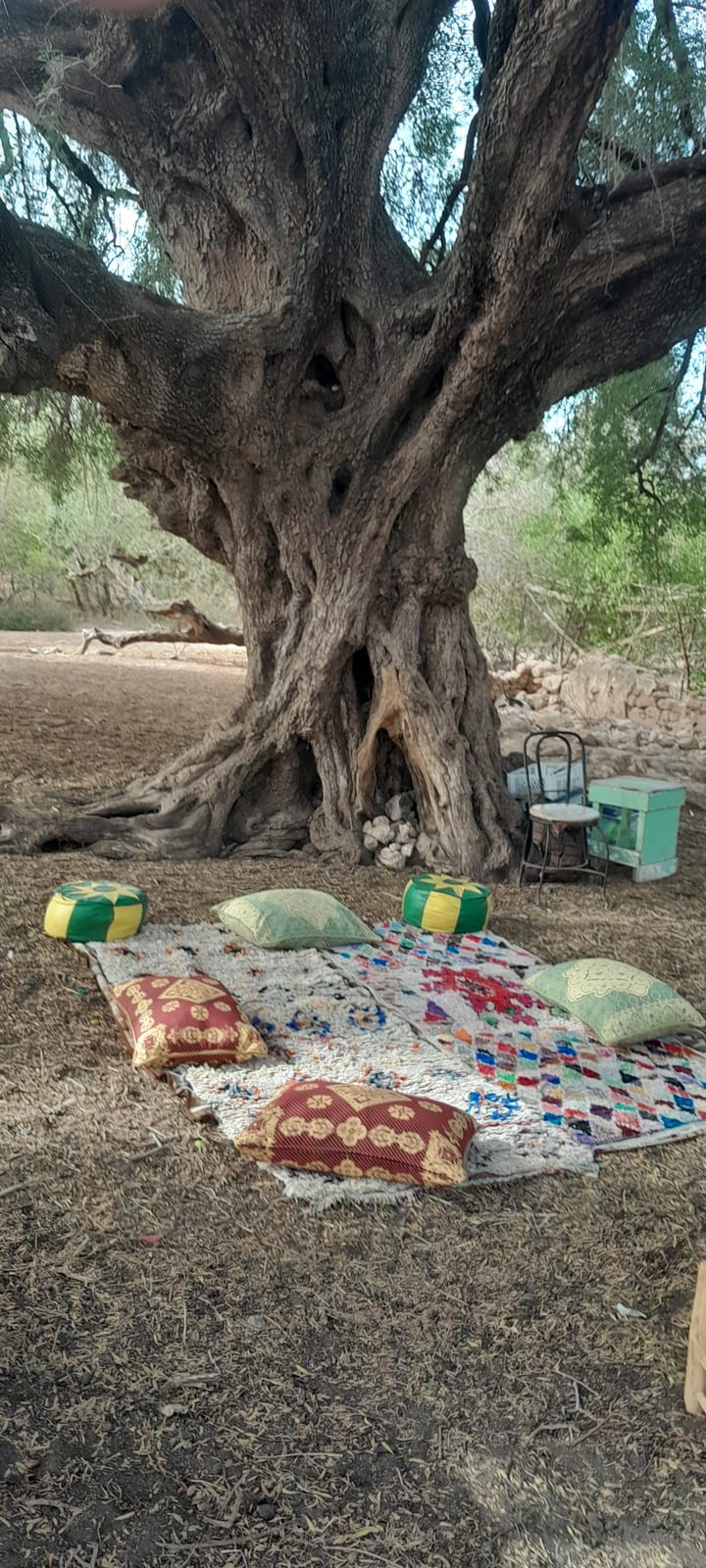
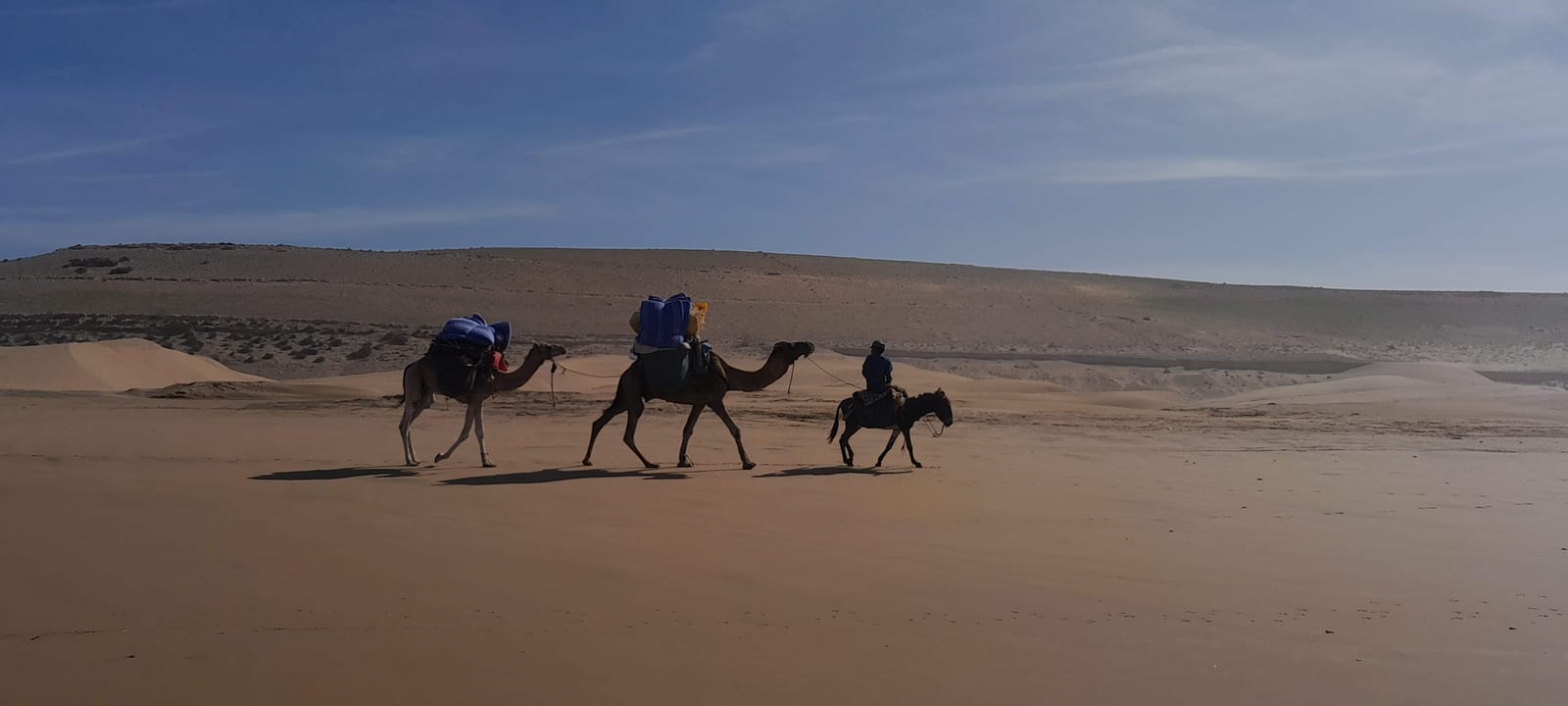
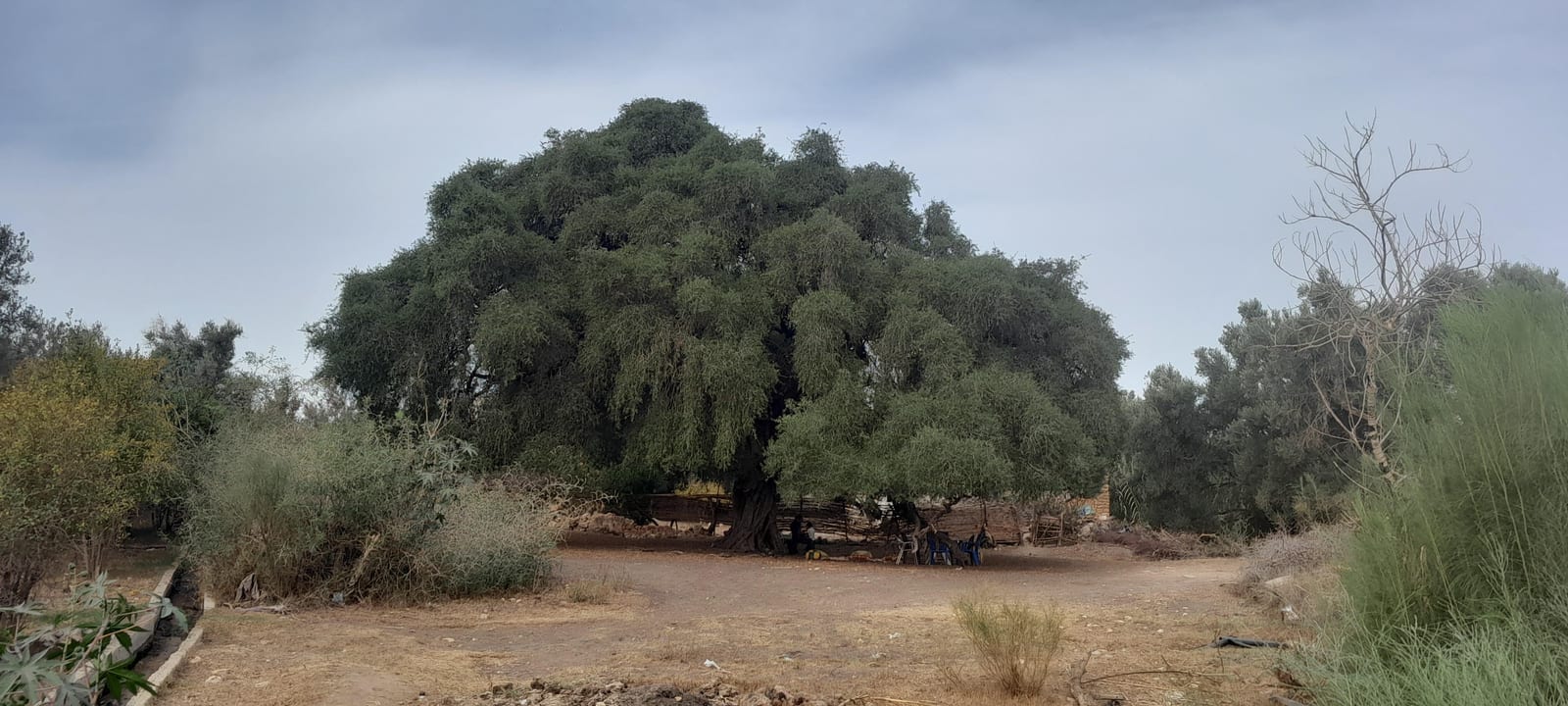
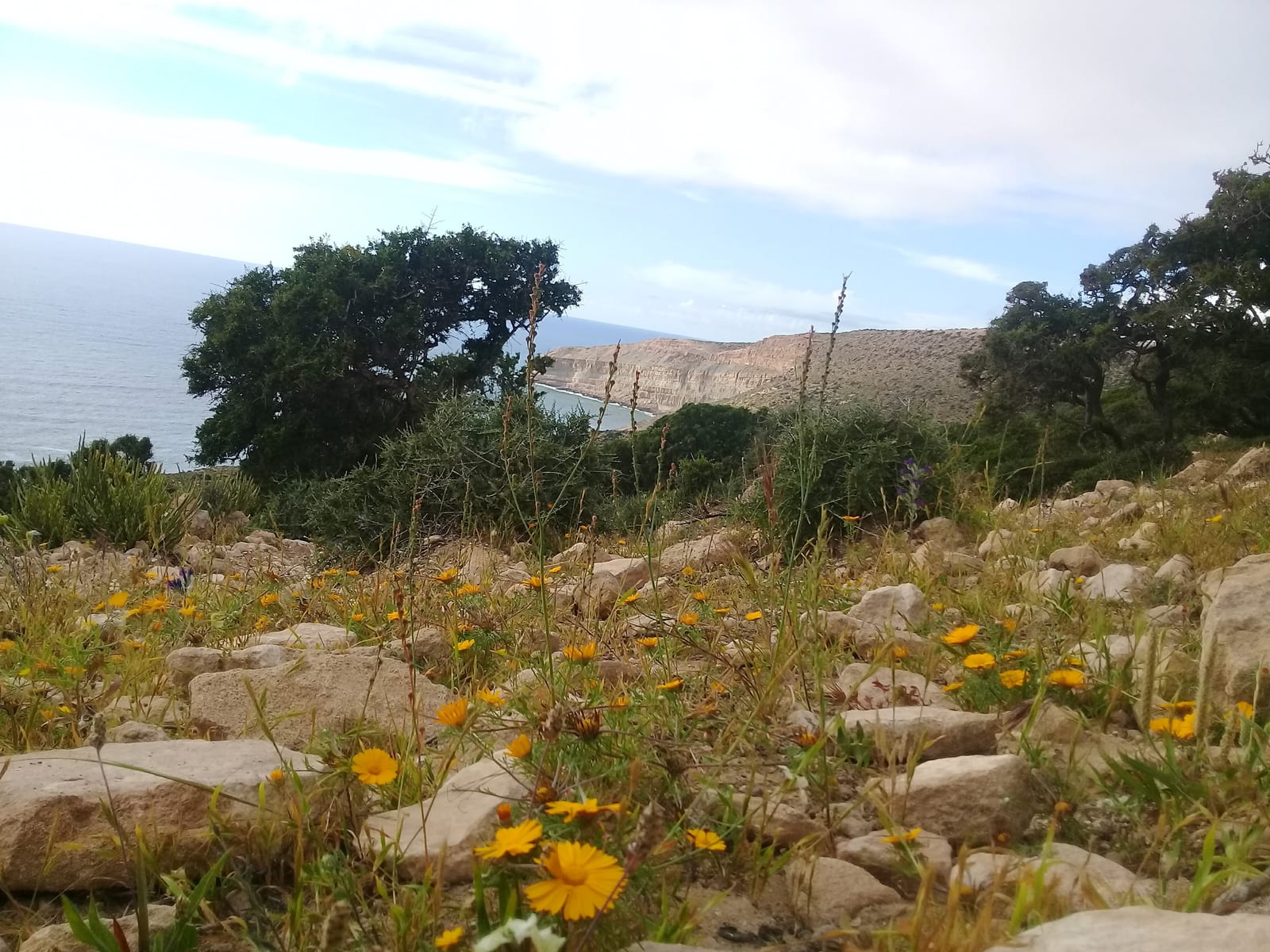
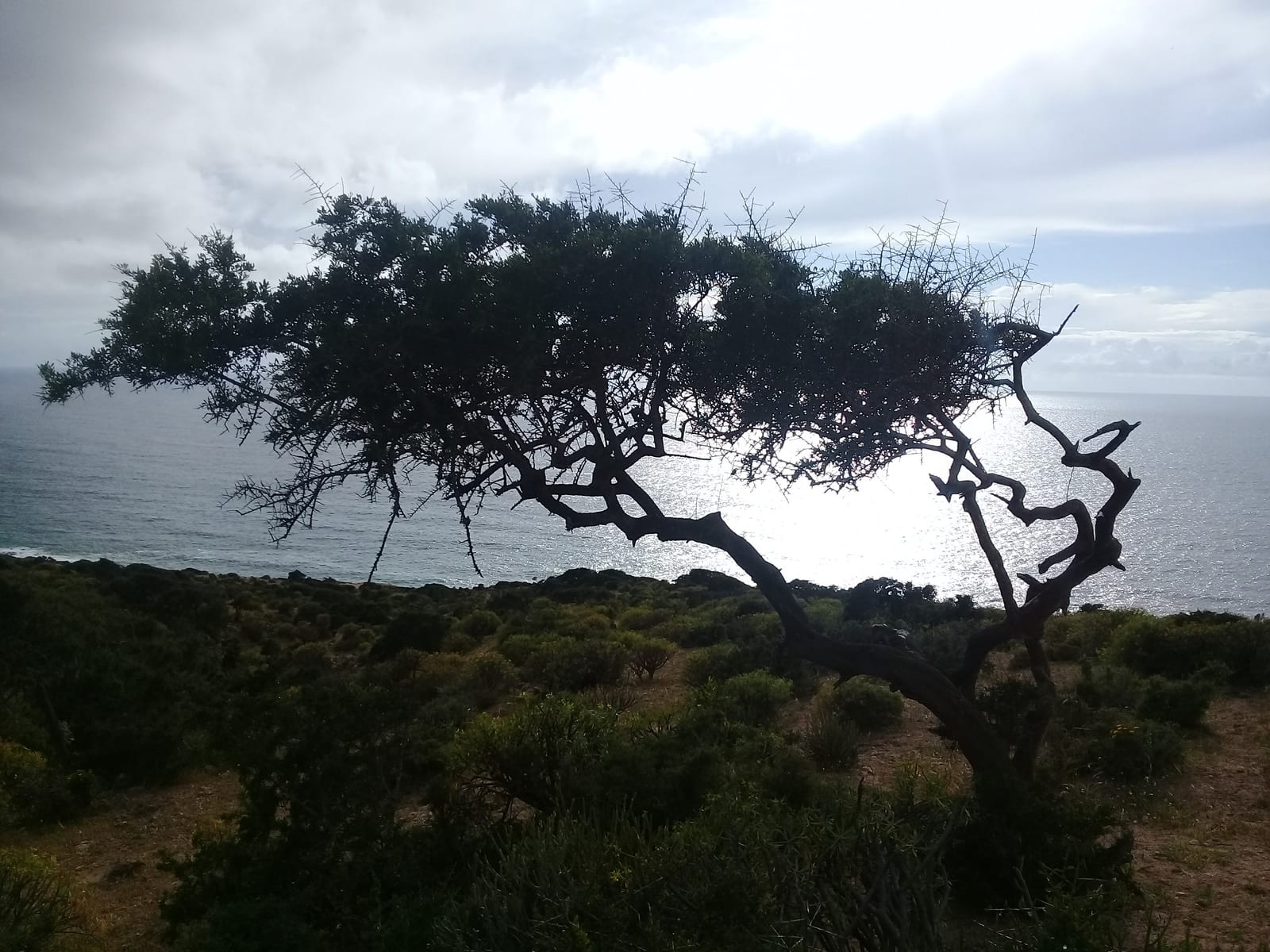
Two days, one night. The first is a walking day: we set out in the morning and make our way toward the campsite, on the coast or inland depending on the season. The pace is the group’s, with the stops it needs — the shade of an argan tree, a village crossed, a tea offered to us that nobody refuses.
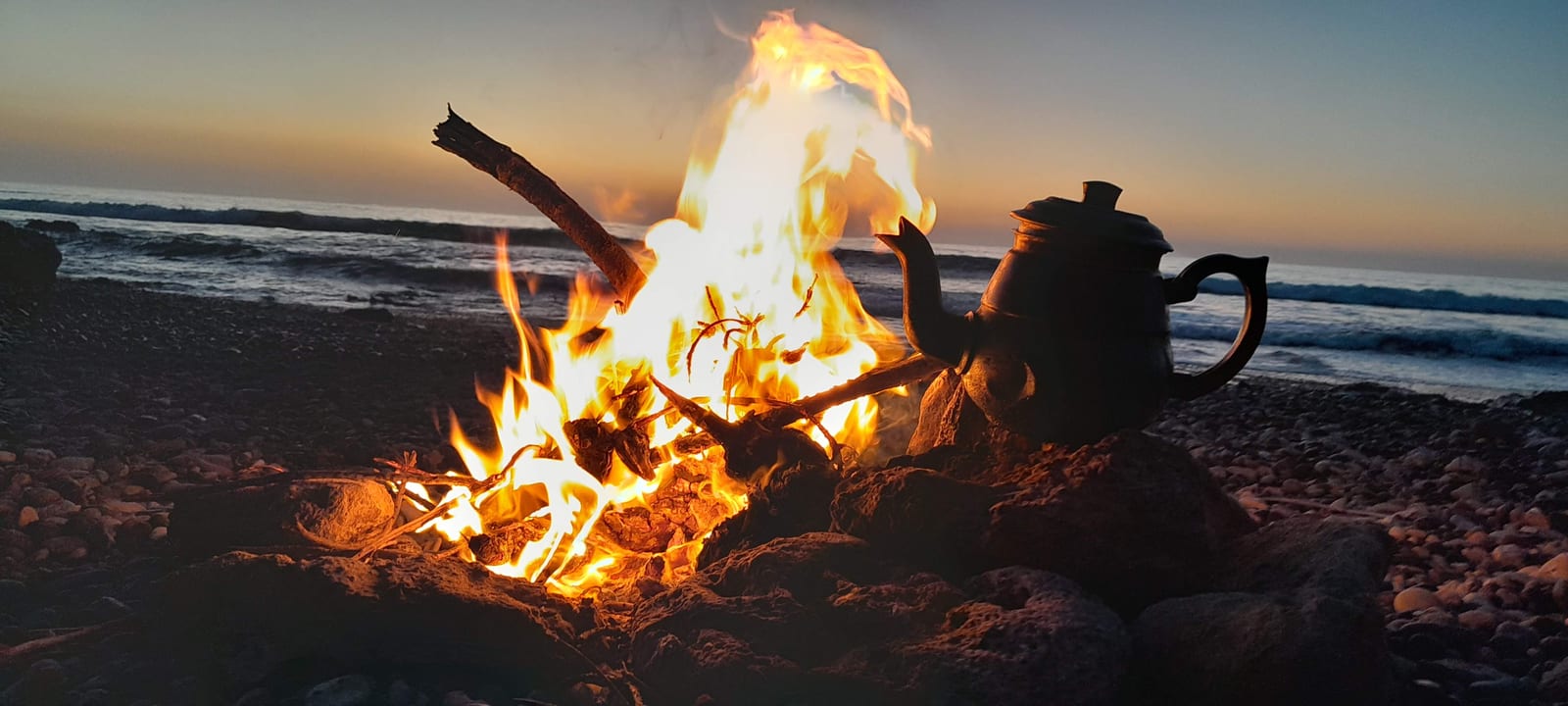
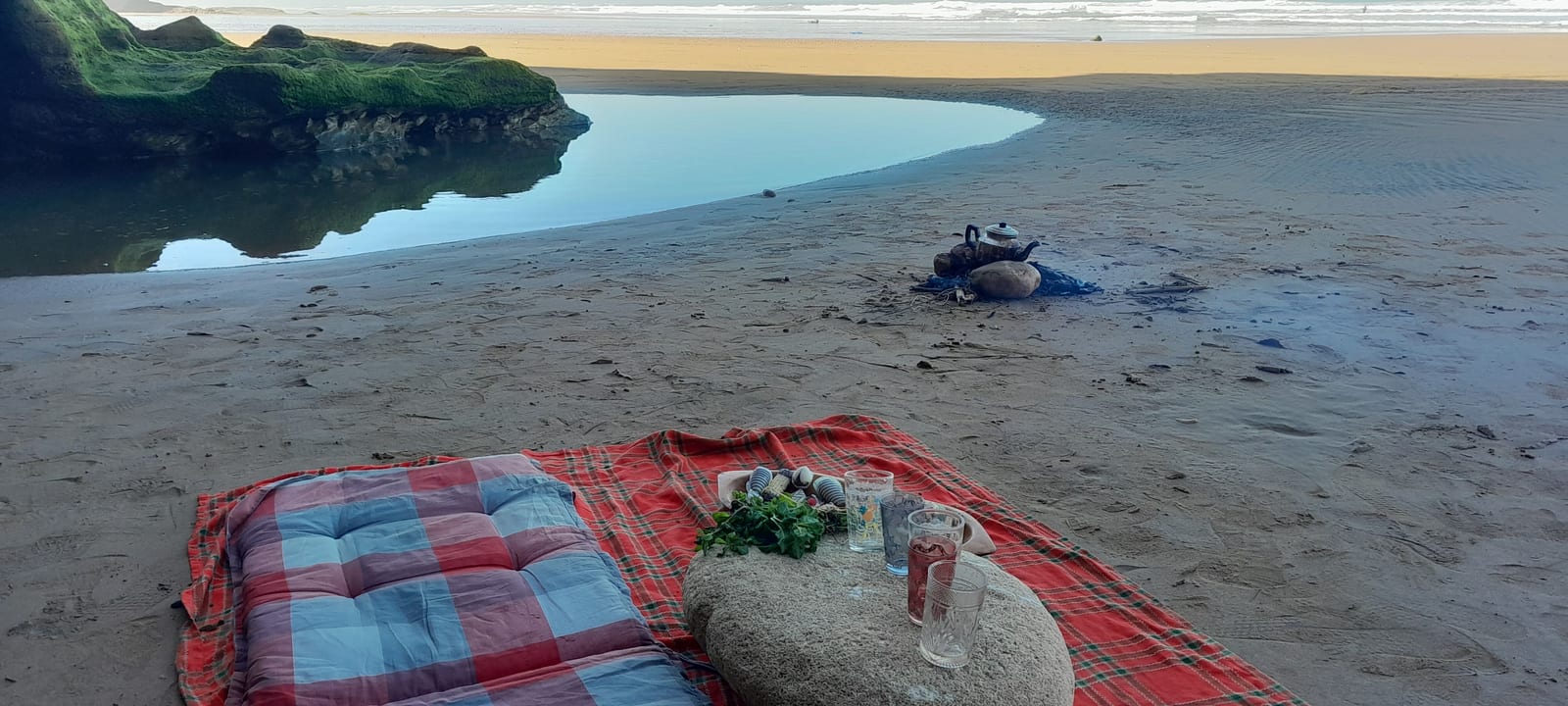
The camp goes up in the late afternoon, as the light lengthens: the tent unfolded, the wood gathered, the fire lit. That is often the moment that stays sharpest in the memory — the hour when the camp does not exist yet and has to be brought into being.
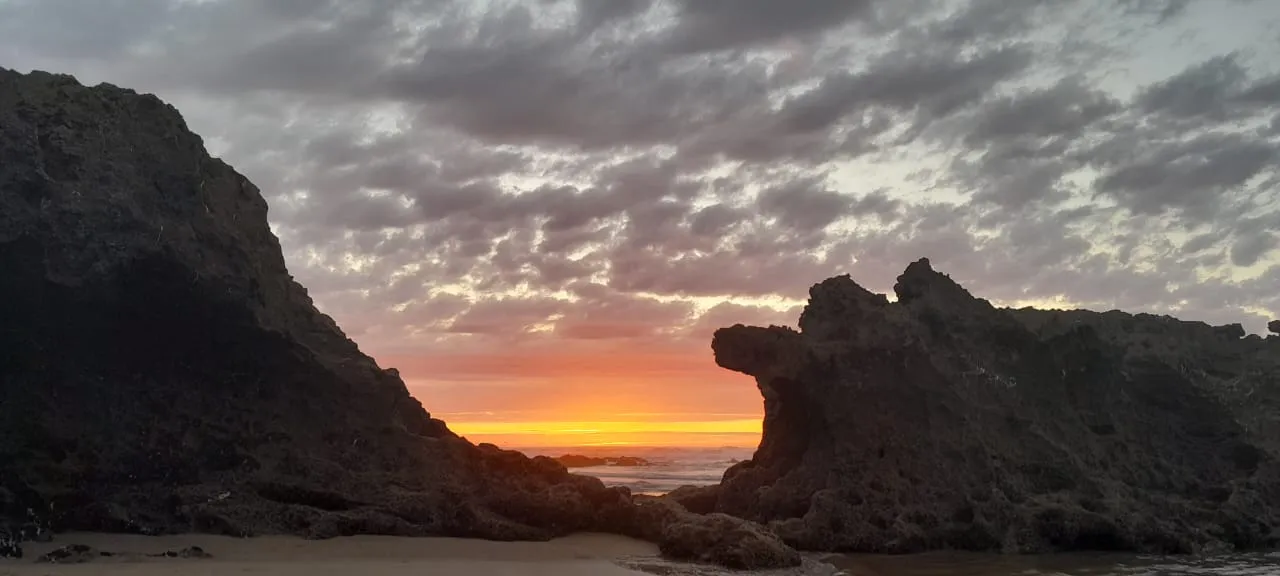
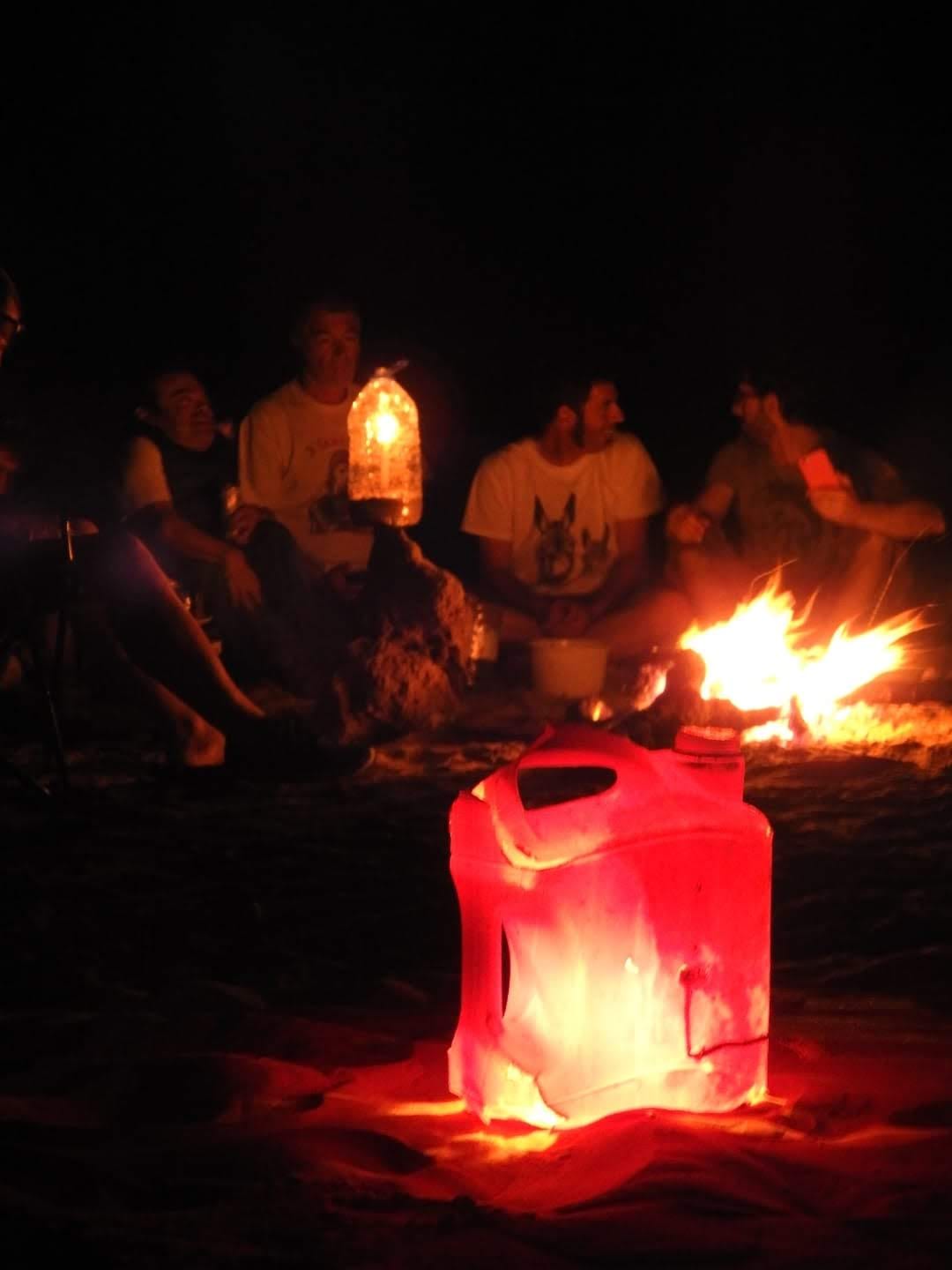
Then comes the night, and it is a long one. The tajine simmers on a low fire, the tea passes from hand to hand, the conversations stretch out — until nobody is talking any more. Far from the city lights, the sky fills up. We recognise a few constellations and invent the rest. Sounds carry differently: the surf below, the wind on the canvas, a dog very far away.
We sleep under the tent, or outside if the wind allows. Sleep comes late and early at once.
The next day rises with the low morning light, the kind that grazes the ground and draws out every stone. Breakfast is unhurried, then we fold the camp away and leave nothing behind us.
The second day is shorter than the first. We walk back another way — not to add kilometres, but because a place is never told the same way twice.
We will return light as the wind, like birds, like children — shaking off the thick dust we left behind and carrying with us a new vision, the best possible version of ourselves.
We will return — but we will not return the same.