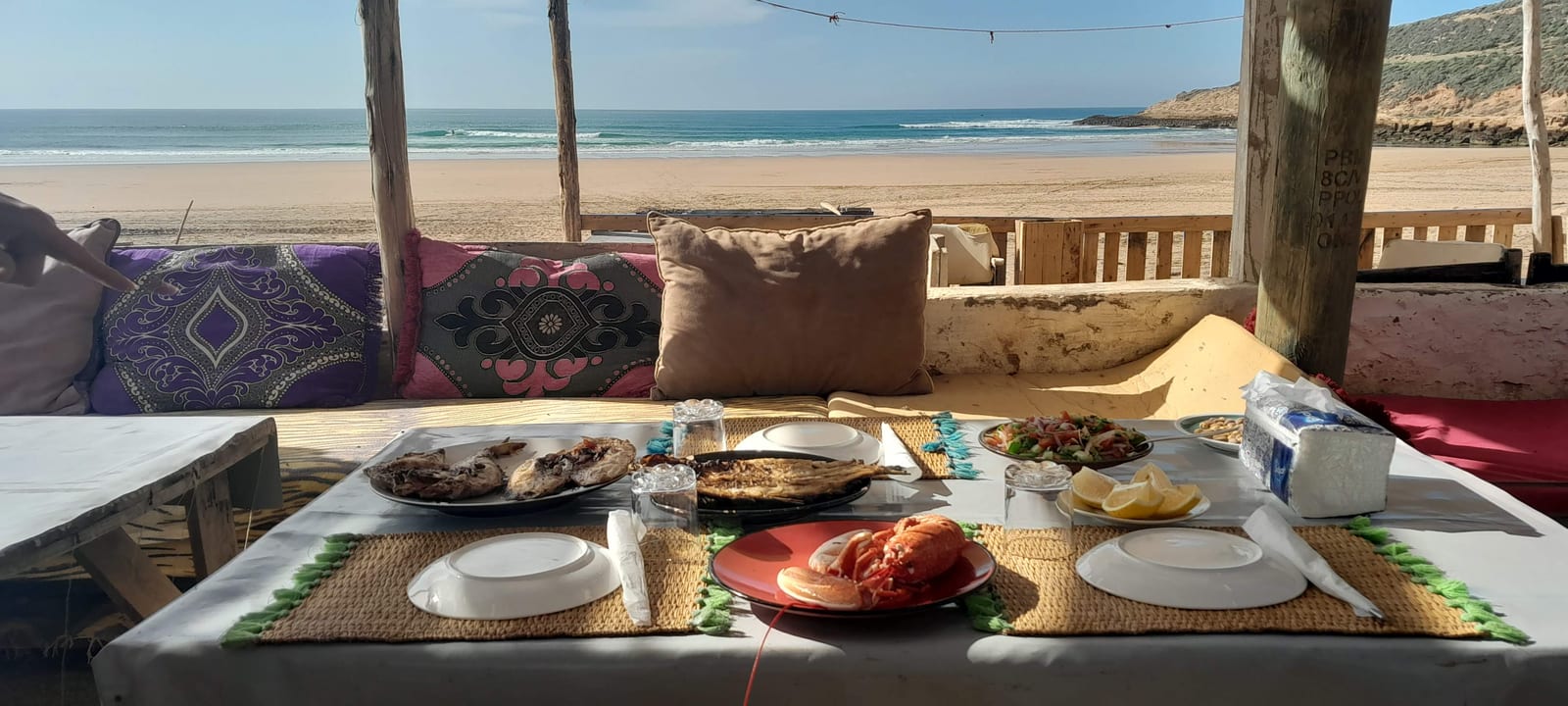
A byword for conviviality, Moroccan cuisine is a moment to share — a true jewel for the palate, and an invitation to every sense: from smell to sight to taste.
A cuisine of influences
Morocco is a country rich in a land that offers a palette of delicious produce. Its culinary specialties are varied — from sweet to savoury — generous, with the soft scents of spice.
Through its Arab, Andalusian, Berber and Mediterranean origins, Moroccan cuisine is the fruit of many influences. Recognised as one of the best in the world, its success owes to its faculty for marrying flavours, aromas and spices.
Our table
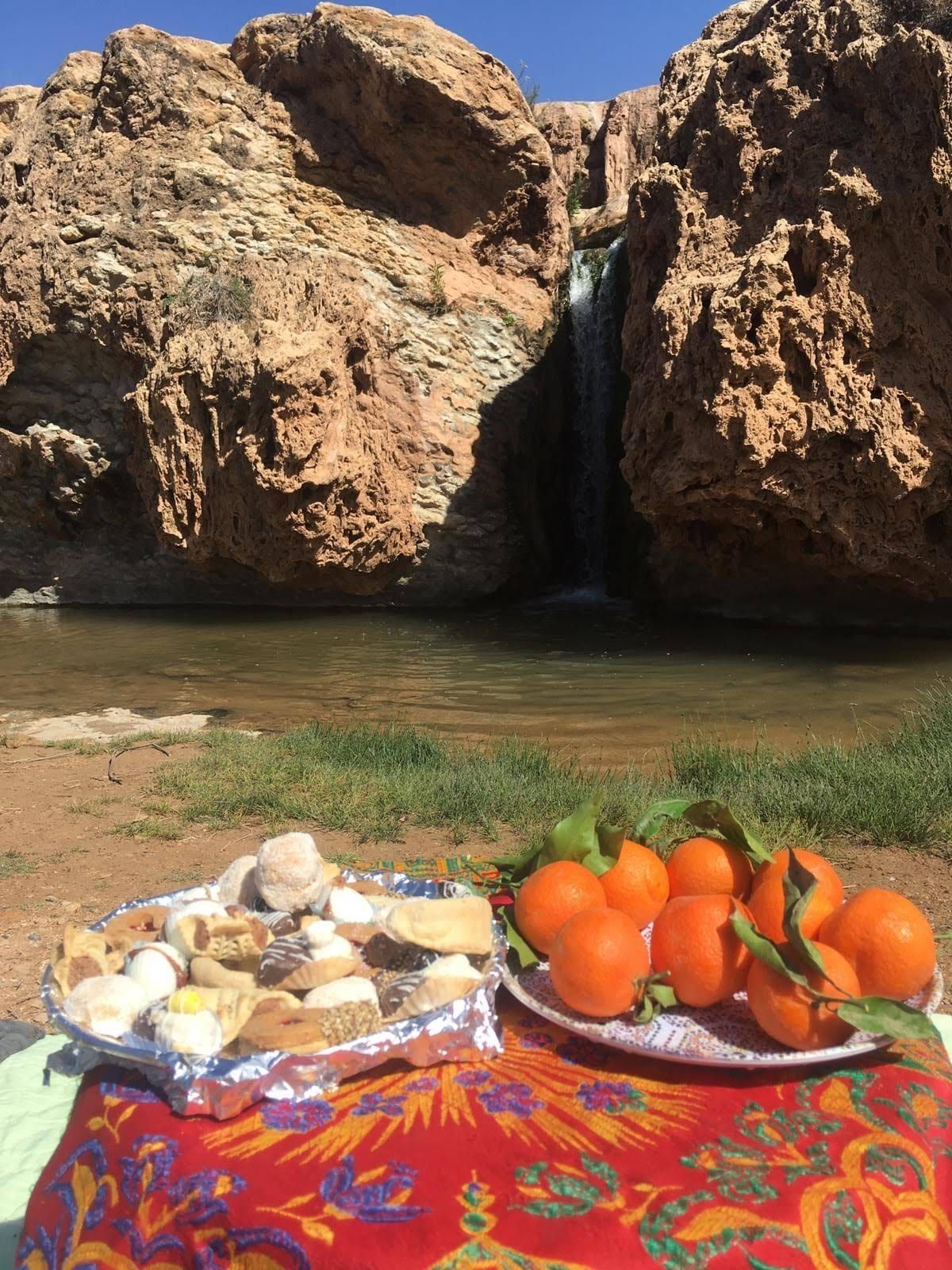
At Caracol Adventures, the same care we bring to an itinerary returns in every meal. We favour ingredients fresh, natural and organic — whether for a picnic on the heights, a lunch break on a farm, or a dinner shared with our Berber partners.
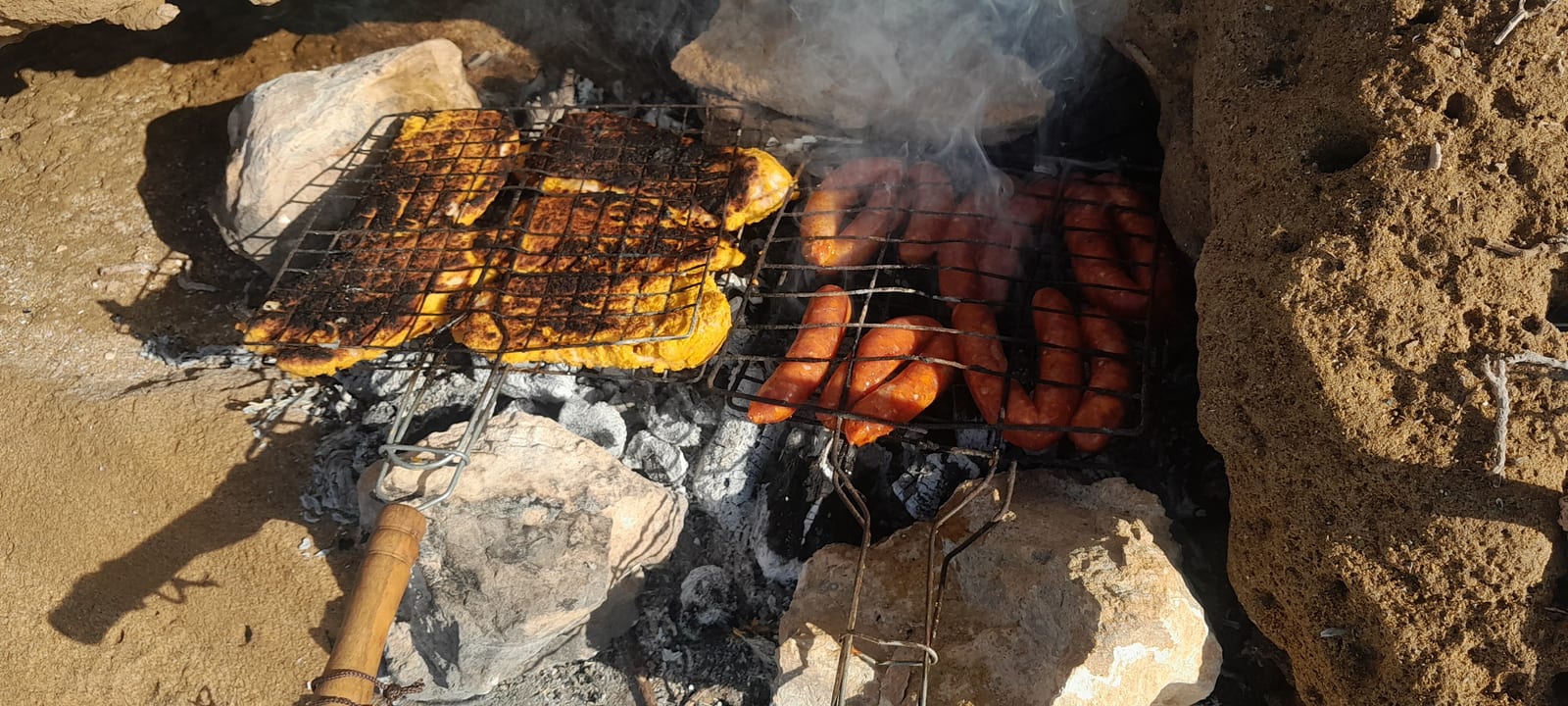
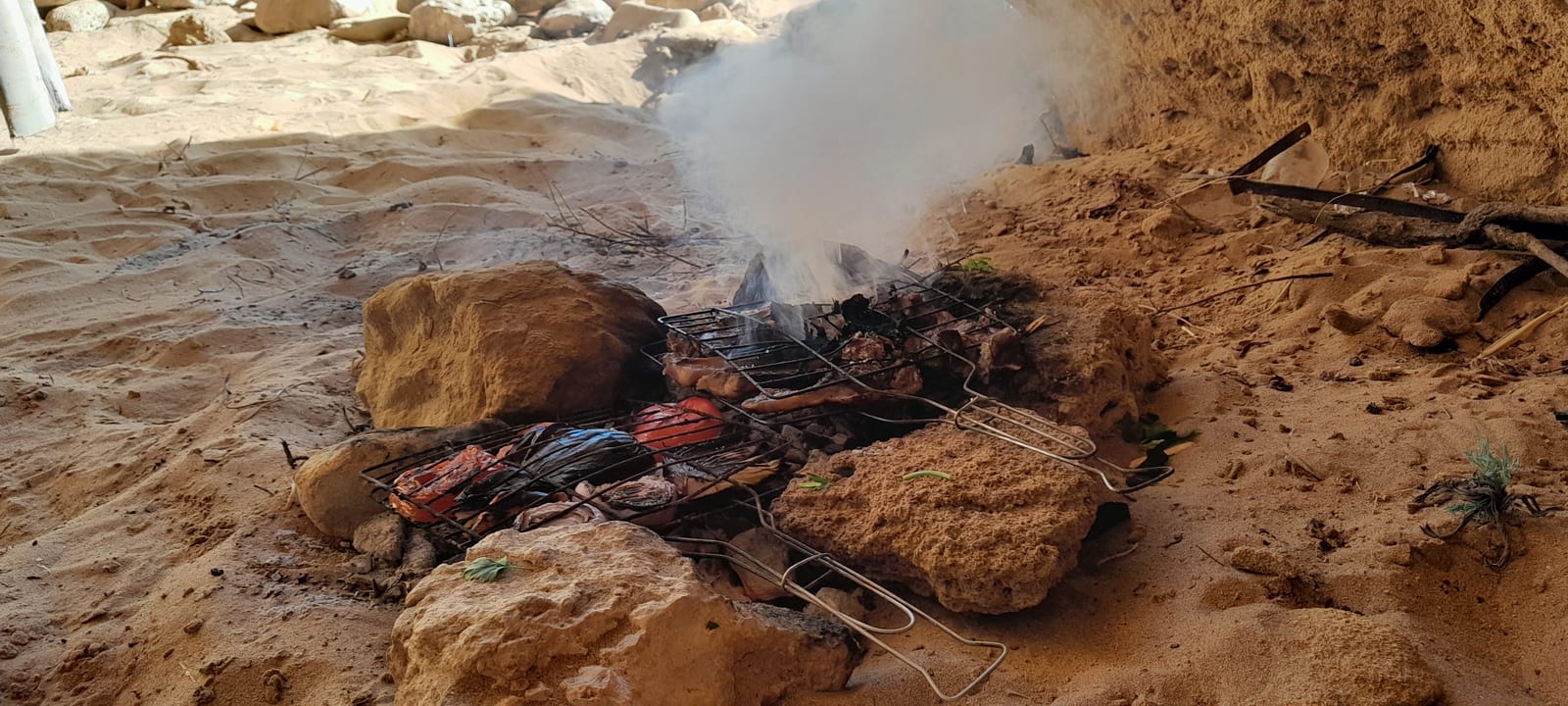
We use preparation and cooking methods authentic to the land, designed to introduce you to Moroccan and Berber cuisine as it is made — without detour.
We share our know-how in open-air cooking, in bohemian cuisine, as well as our knowledge of spices, of aromatic herbs, and of recipes deeply rooted in this earth.
Couscous: dish of memory, or political marker?
Couscous is often presented as a simple traditional dish. Its history says far more than a recipe passed from one generation to the next.
Archaeological digs across North Africa have brought to light steam-cooking vessels dating from antiquity: the technique is old. Historians place its origins in Amazigh societies, where durum wheat semolina was rolled by hand before being cooked slowly above a broth.
But couscous did not only feed. It travelled. From the Middle Ages, trade routes linked the Maghreb to Andalusia and to the rest of the Mediterranean basin; medieval culinary manuscripts describe preparations close to the couscous of today. Over the centuries it became a powerful cultural marker, crossing dynasties, migrations and empires.
In Morocco it takes on a particular social dimension: it is traditionally prepared on Friday, the day the family gathers. The preparation asks for time, for patience and for a precise craft. Rolling the semolina by hand is a gesture learned, repeated, handed on.
It is in the twentieth century that it takes on a political dimension. With migration towards Europe, and towards France in particular, it became one of the most widely eaten dishes and came to stand for Maghrebi identity in the diaspora. Some have called it a dish of reconciliation, others a symbol of belonging. In 2020, UNESCO inscribed the knowledge and practices related to couscous on the intangible cultural heritage of humanity, recognising its importance across several countries of the Maghreb.
And the famous couscous royal? Contrary to what many believe, that version heavy with several meats is a recent adaptation, popularised in the restaurants of Europe. It reflects a modern evolution rather than an ancestral tradition.
Between myth and reality, couscous remains a dish in motion. It tells of the land, of wheat, of patience. It tells too of borders, of departures, of encounters. The next time you share one, ask yourself the question: are you tasting a family tradition, or a chapter of Mediterranean history?
What few people know about the origins of the tagine
We think we know the tagine. We picture a fragrant dish set down at the centre of the table, shared among family. Its history runs deeper than we imagine.
The tagine is not only a Moroccan recipe. It is an old technique, born of a territory. Historians agree in placing its origins in the Amazigh practices of North Africa. Long before the imperial palaces, slow cooking in an earthenware vessel was already in use — an adaptation to an arid climate, and a way to spare wood.
The conical shape of the lid is not aesthetic, it is scientific. Steam rises, condenses, then falls back onto the food. The result: an even, tender cooking with no loss of moisture. An ingenious invention in a demanding environment.
Medieval culinary texts — notably the Andalusian Kitāb al-Ṭabīkh of the thirteenth century — describe simmered preparations very close to the tagine of today. Ibn Khaldun likewise writes of the ways of life and the techniques suited to the peoples of the Maghreb. The tagine does not appear by chance: it stands within a cultural continuity.
Then come the Moroccan dynasties. From the eleventh century, with the Almoravids and the Almohads, Morocco becomes a crossroads between sub-Saharan Africa, Andalusia and the East. Spices circulate: saffron, cinnamon, ginger, almonds. The tagine evolves. From a simple pastoral dish it becomes a dish of refinement. It is in this period that the celebrated sweet-and-savoury pairings are born: lamb with prunes, chicken with preserved lemon, honey and almonds. Andalusian influence brings sophistication and aromatic complexity. The tagine enters the palaces.
But it never leaves the people. In Moroccan homes it remains a social ritual. Everyone eats from the same dish, with bread. The centre is often kept for the guest of honour. The act of sharing creates a bond; slowness imposes patience.
Some anthropologists speak of a living culinary memory. The tagine varies by region: more citrus in the north, more herbs in the Atlas, more spice in Marrakech, fish along the Atlantic coasts. Today it is cooked in the oven, in the pressure cooker, reworked by modern gastronomy. And yet earthenware remains incomparable: it spreads the heat slowly, transforms the texture and concentrates the flavours.
The cob oven
In the rural areas of Morocco, the clay oven is generally a cob oven: a dome-shaped structure made from a mixture of earth, sand and straw. The fire is lit inside and the heat is held by the thickness of the walls, allowing a slow, even bake. It needs regular upkeep to keep it from cracking.
Its role is as much social as economic. It serves as a community centre as much as a domestic one: in many villages, preparing the bread — and sometimes the baking itself — is an activity shared among the women of the neighbourhood. The oven is a place where people meet.
The bread and the pastries that come out of it have a taste nothing replaces. Wood-fired baking is held to be healthier than gas or electric. Built from inexpensive local materials — earth, straw — the oven is a sustainable alternative; many projects today encourage improved ovens, which cut wood consumption and preserve the forests.
Indispensable to daily life, to the local kitchen and to social cohesion: the cob oven is one of the hearts of rural Morocco.
The culinary art is an endless passion. When a guest praises the quality, the presentation and the originality of our dishes, that — for us — is the peak of happiness.