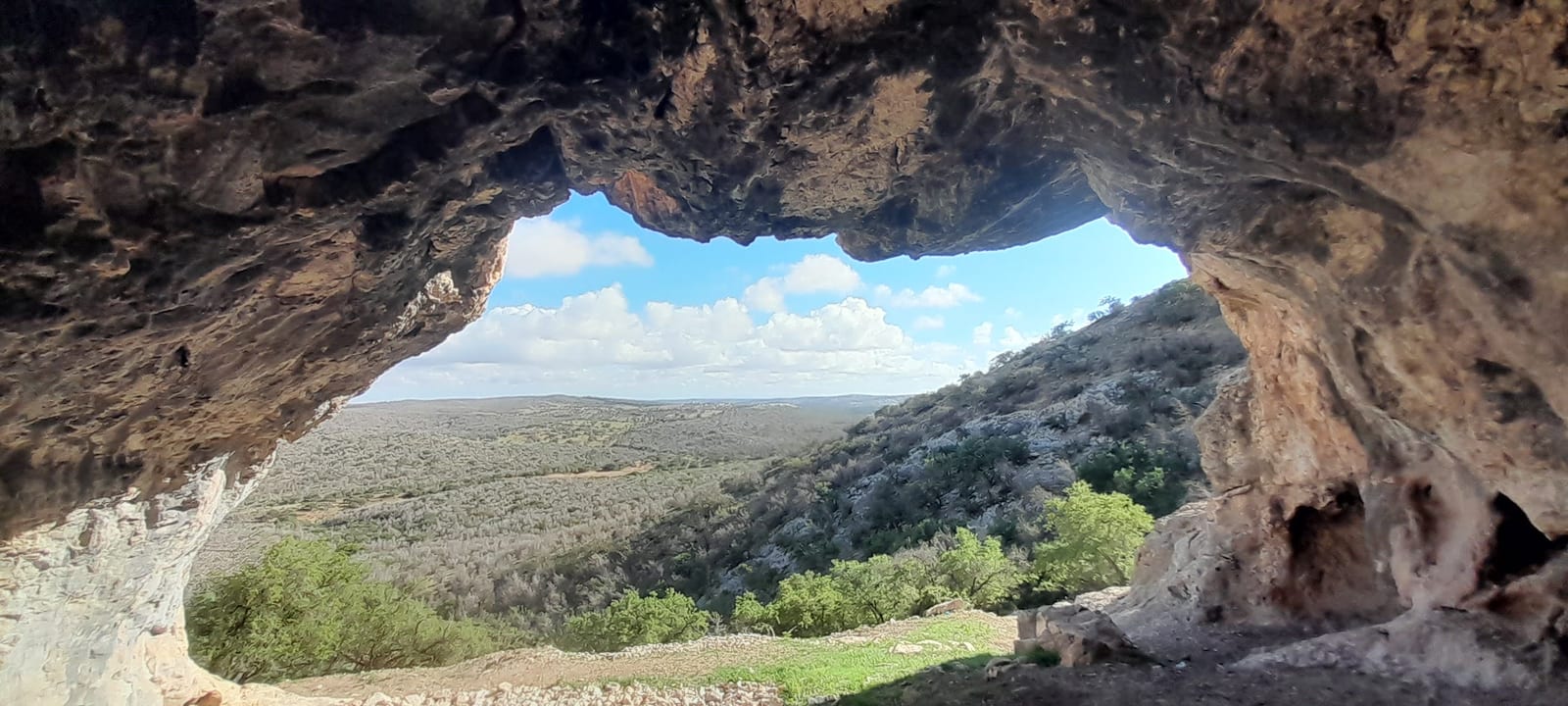
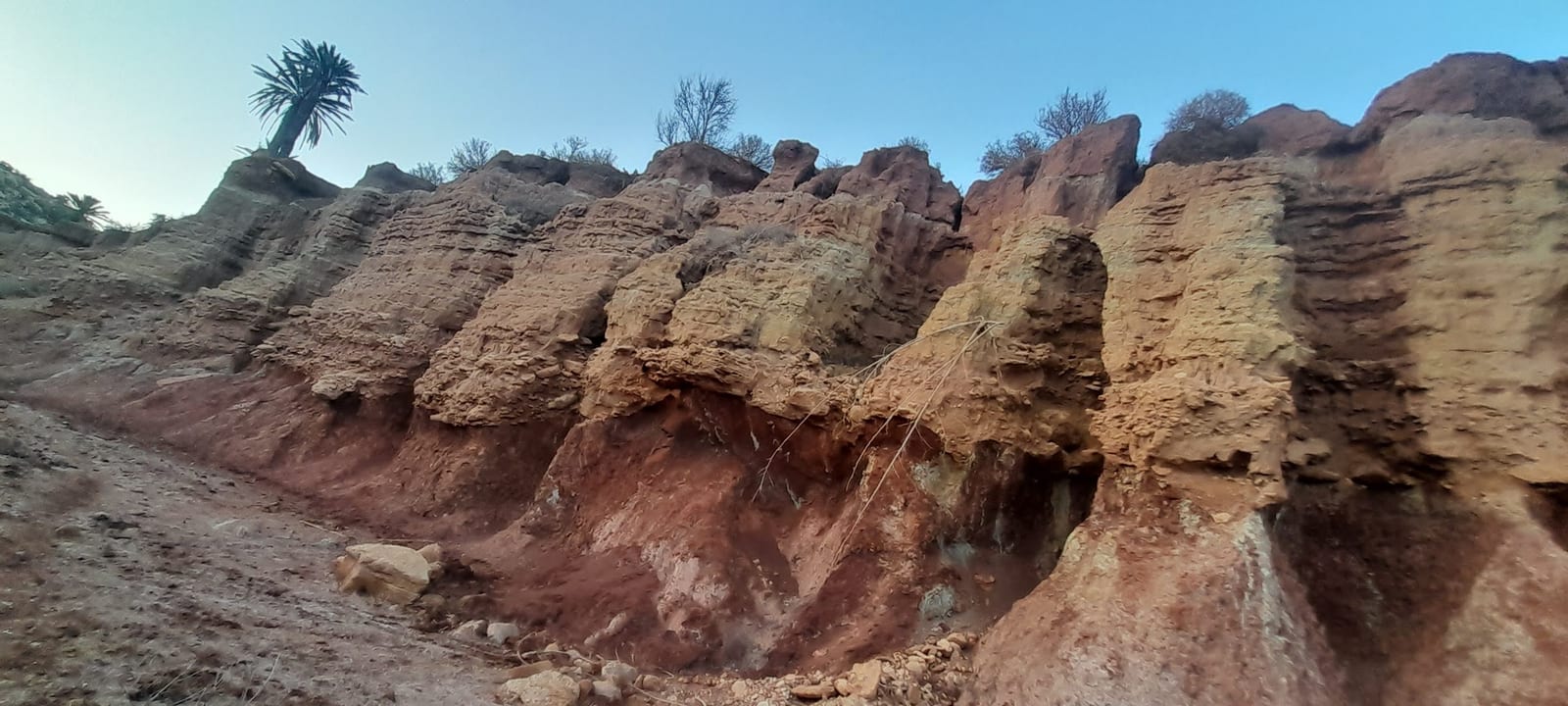
Jbel Lahdid is a mountain range rising to 722 metres, formed — as its name suggests — of significant ferrous masses. You’ll find traces of ancient workings here by the Portuguese, and possibly by the Phoenician colony of Mogador.
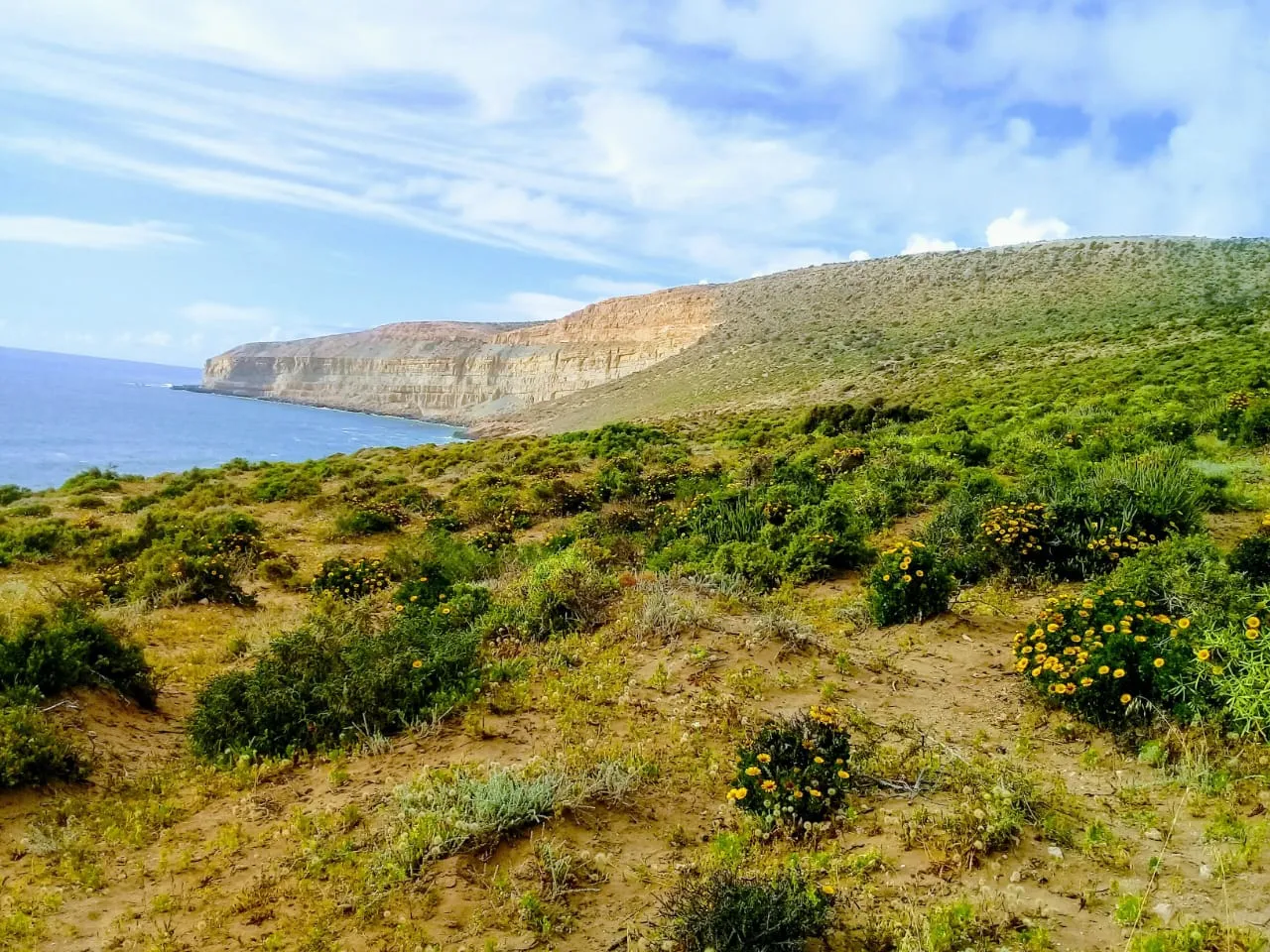
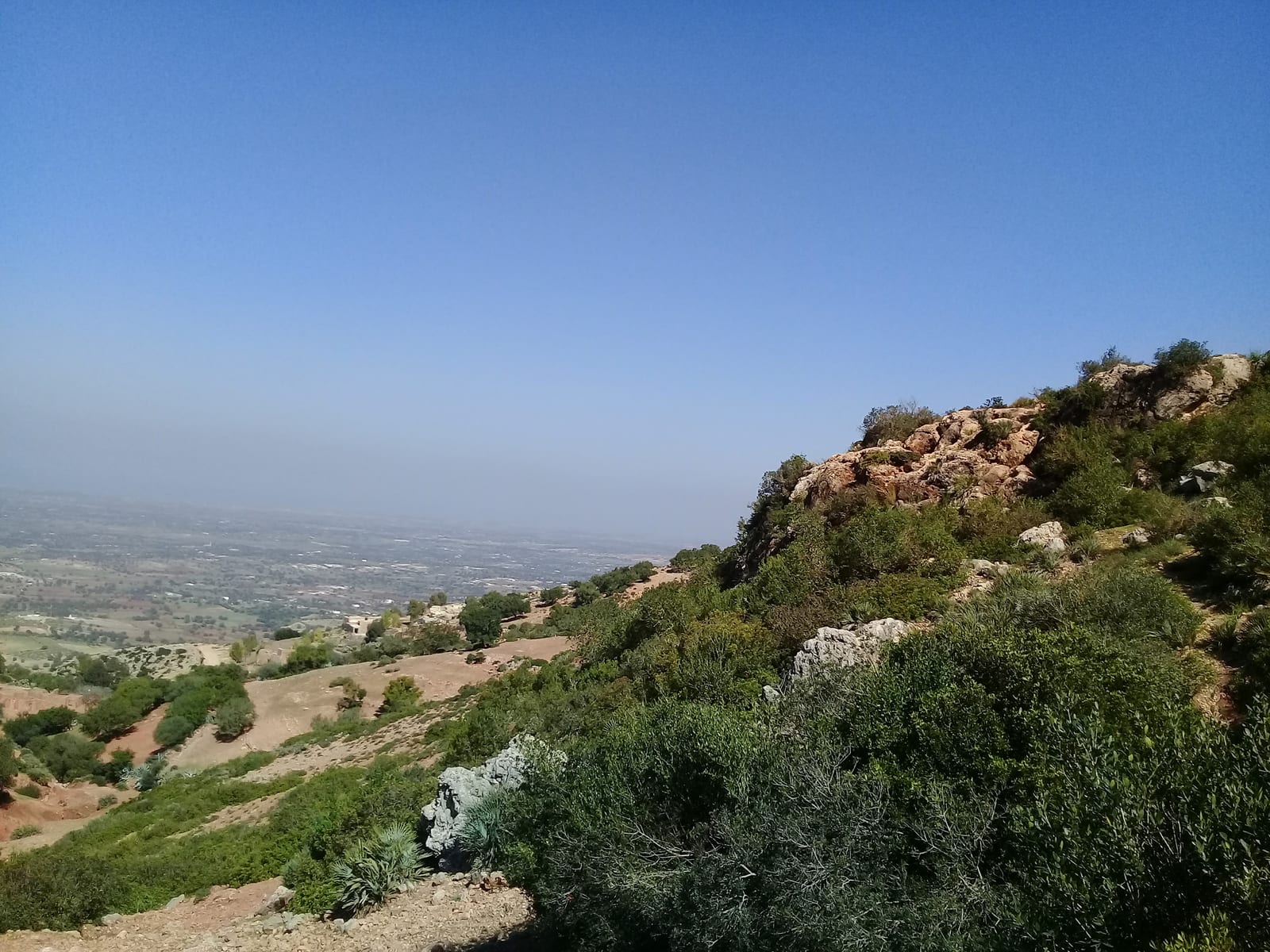
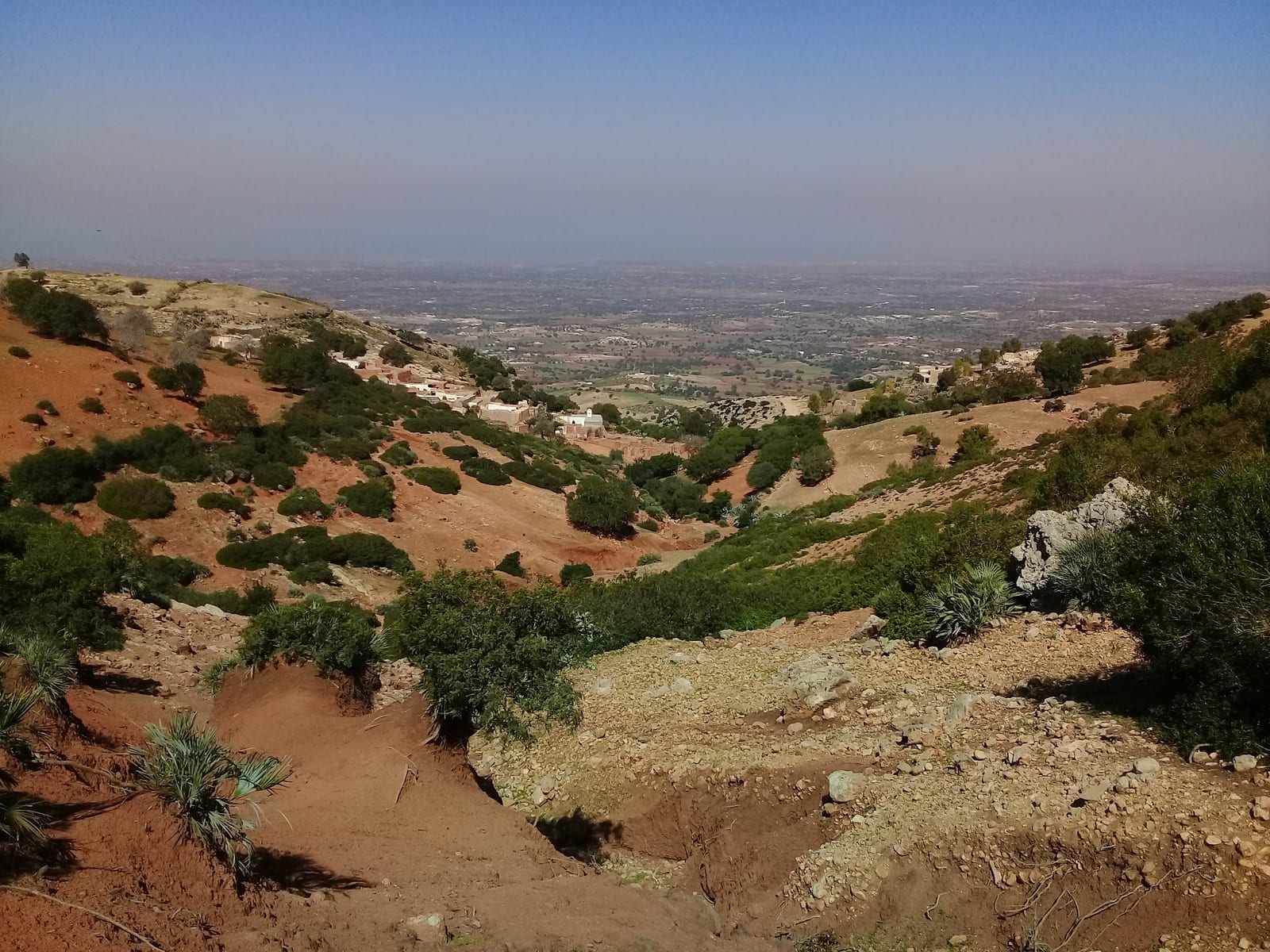
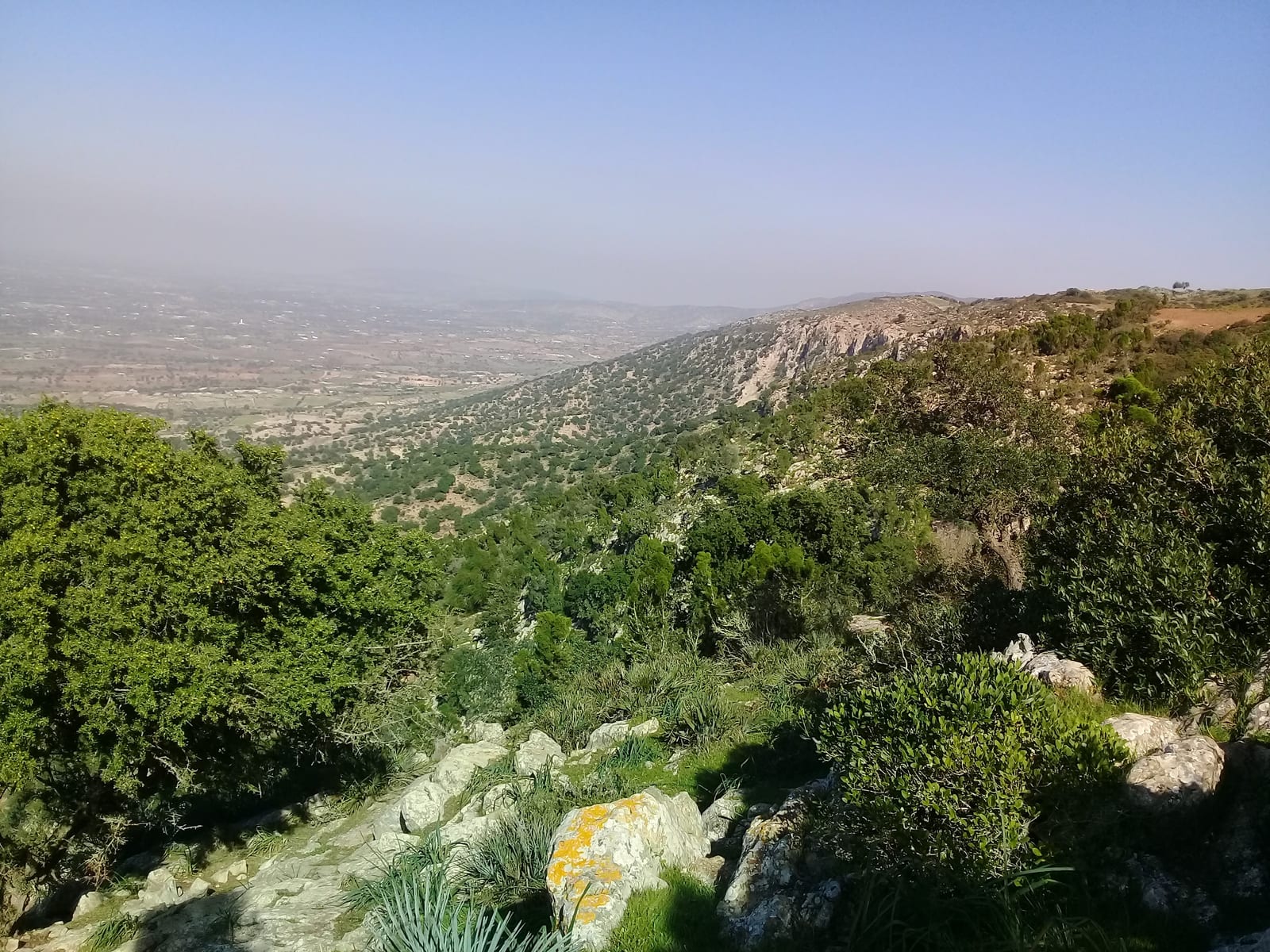
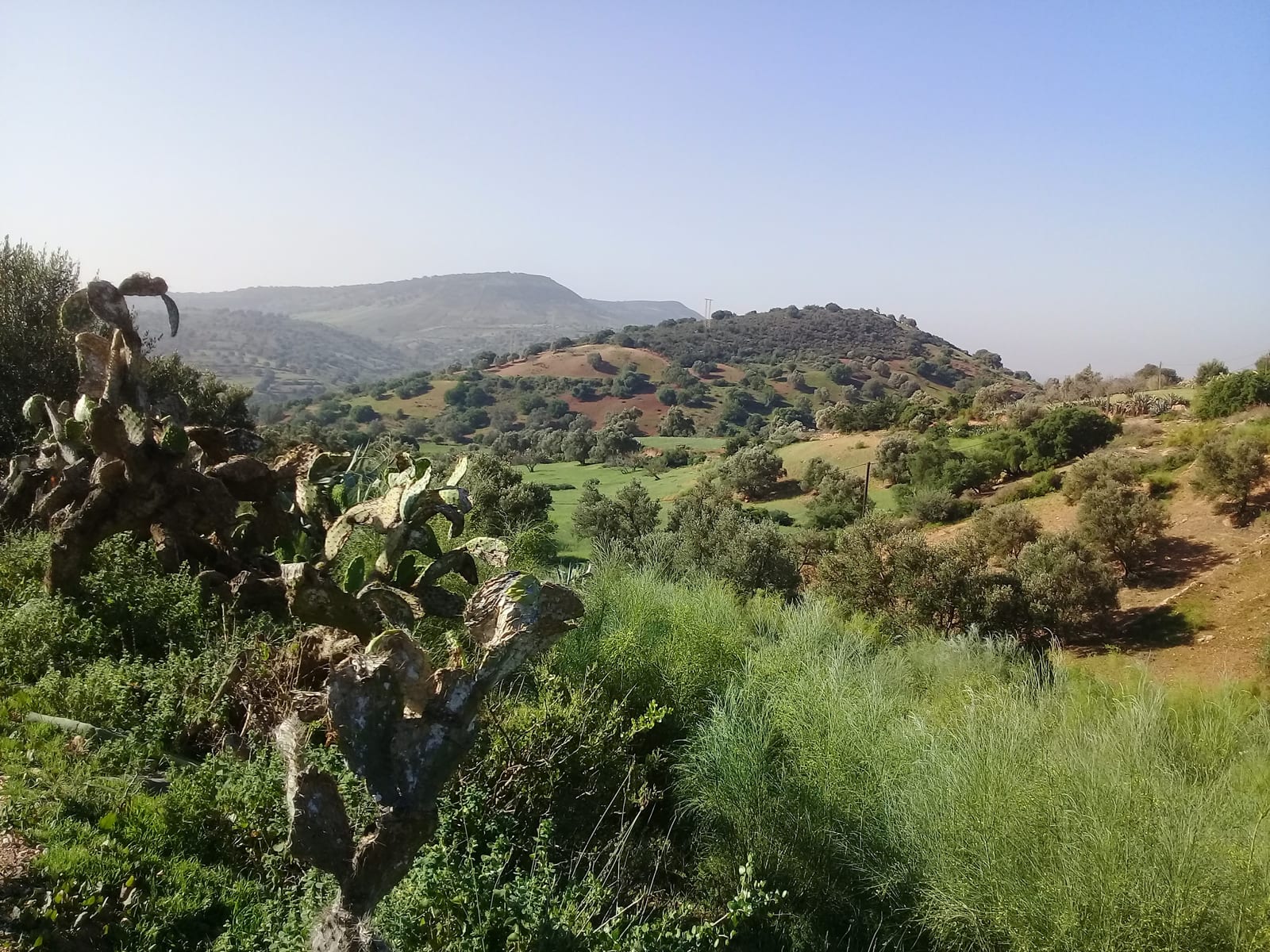
Covered with argan, thuya, wild olive, lentisk and broom, Jbel Lahdid offers the visitor, from the top of its summits, a breathtaking panoramic view.
Its modest height makes it a good first mountain. We have traced simple, varied routes on it, half-day or full-day — for those starting out as much as for those who have been walking a long time.
Fifty minutes of road north of Essaouira, and the walk begins at the foot of the massif, in the forest of thuya, carob and argan. The paths climb in switchbacks; the slope gives way.
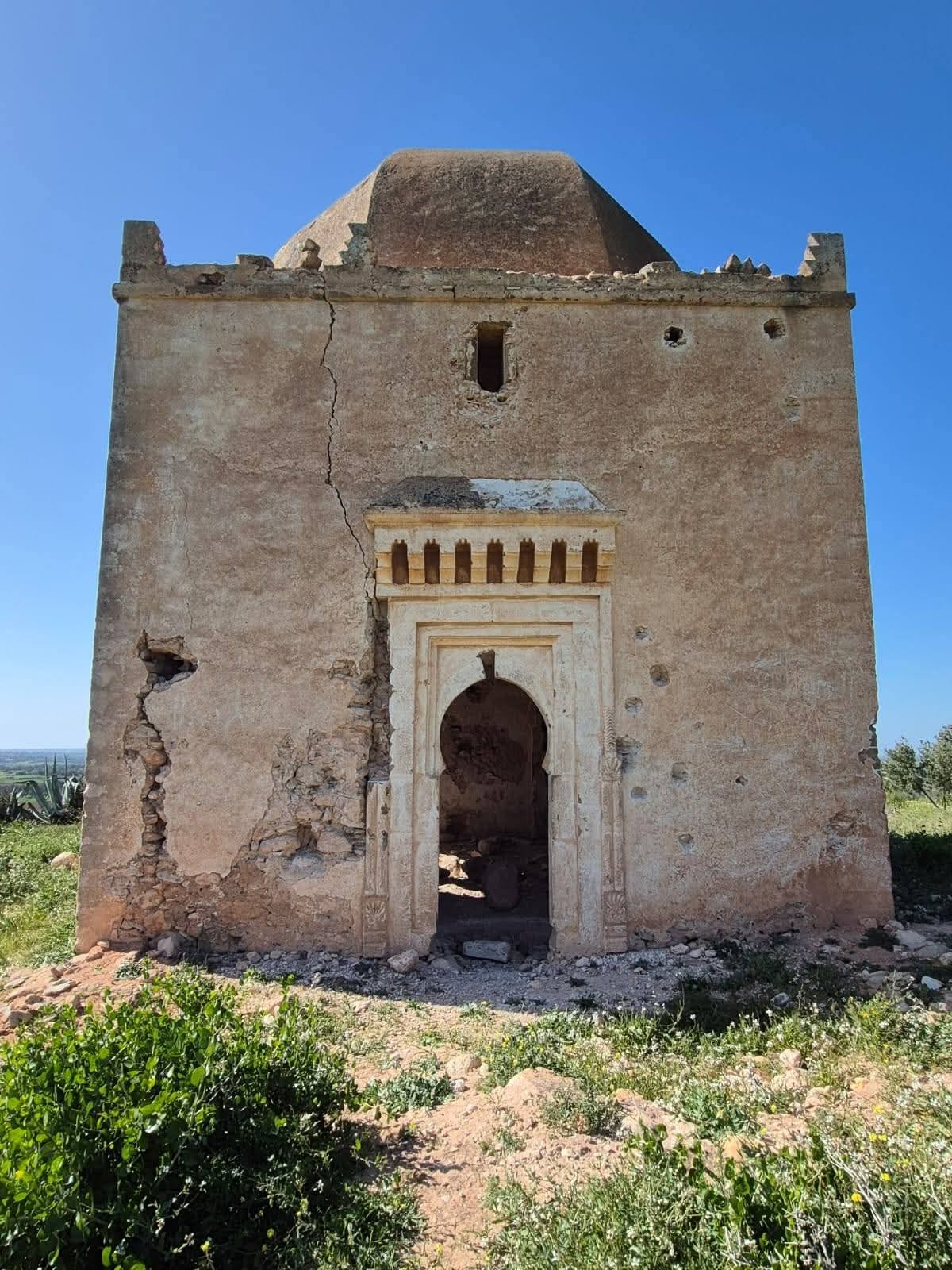
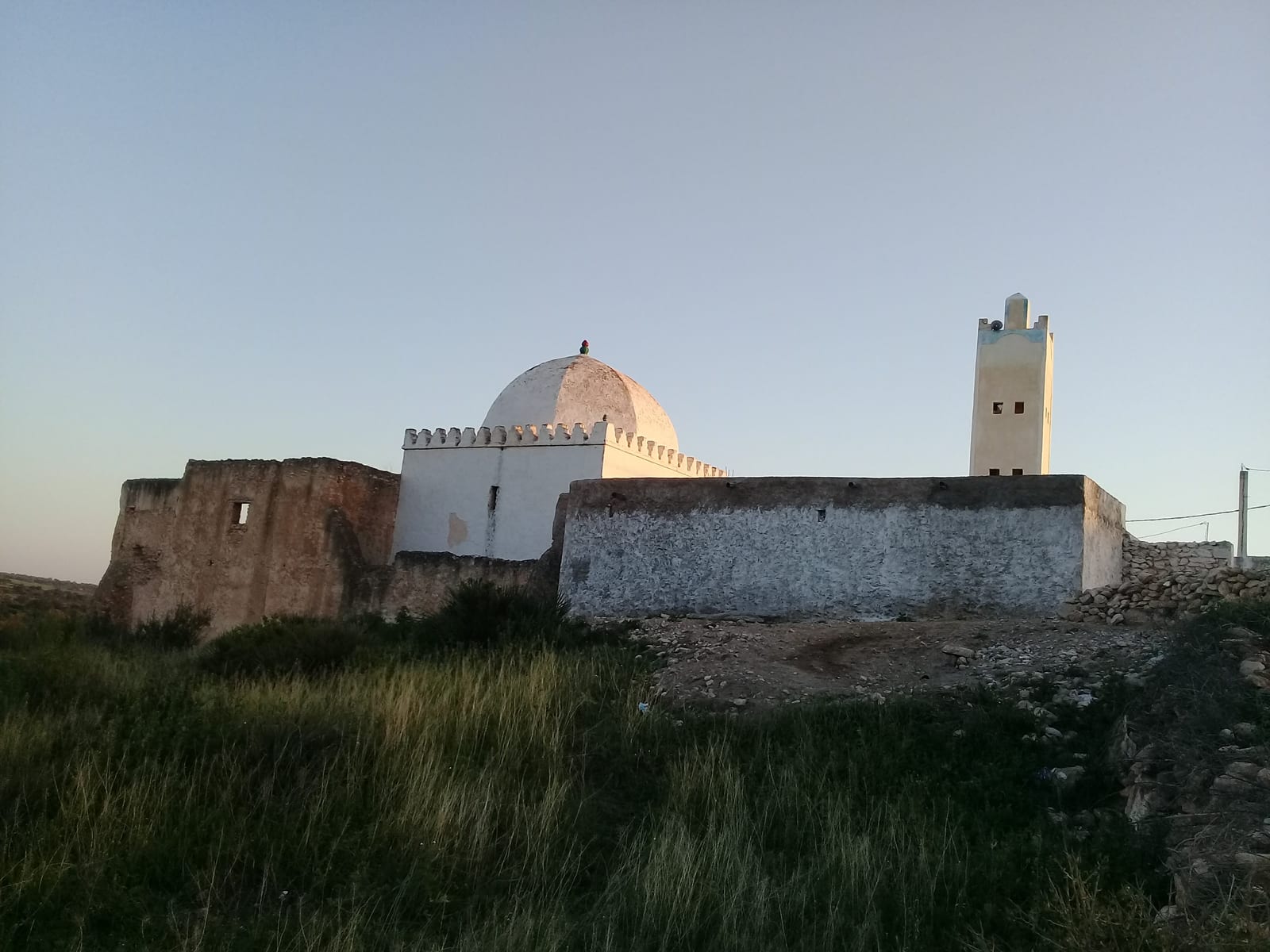
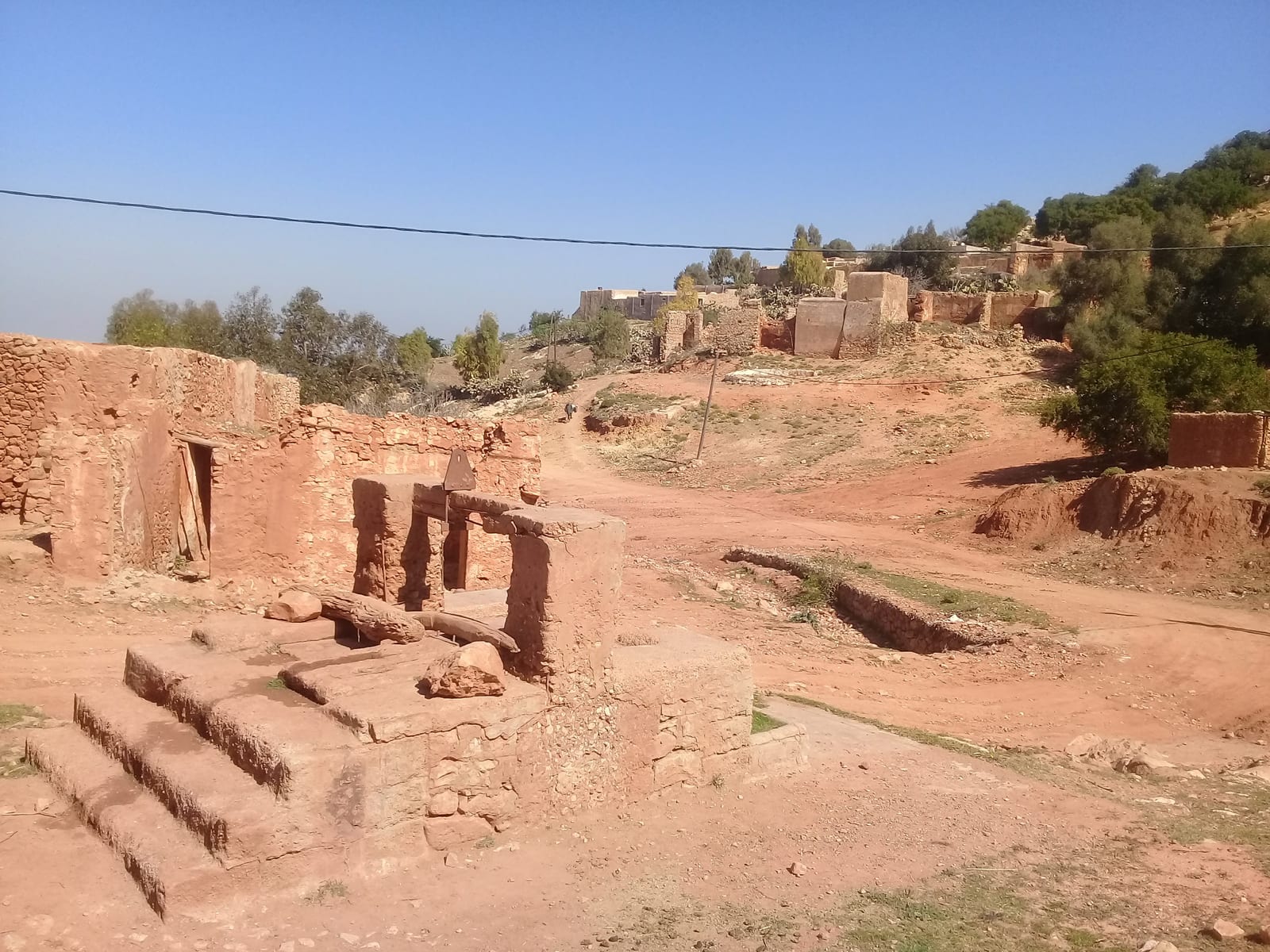
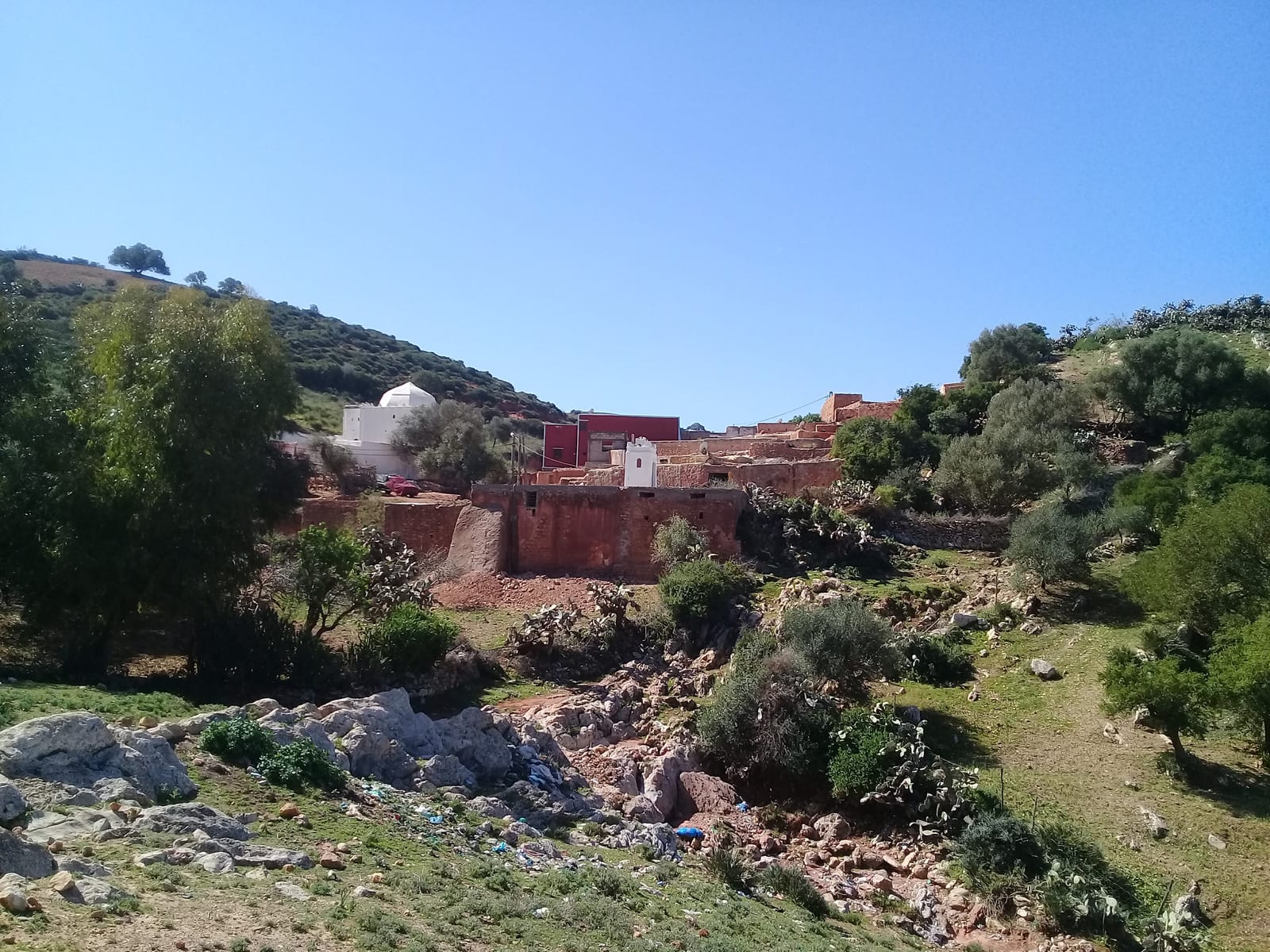
At the summit the Chiadma plain opens all at once: fields of barley, wheat, maize and pulses, hills dissolving into the blue, the ocean at the end of it. Below sits the village of Sidi Ouasmine — adobe houses and new ones mixed together, around the white dome of the sanctuary.
On the way back we cross the fields to an old iron mine, worked and then destroyed by the Portuguese as they left the region. The day ends with a pause: a picnic, grilled food, or a tagine simmered on the spot, depending on how long the outing runs.
The Regraga moussem — an annual Berber pilgrimage — passes through Jbel Lahdid each year on its 44-stage circuit, organised every April to honour the sanctuary of Sidi Ouasmine, considered the Sultan of the Regraga.
At the summit, the tomb of Sidi Ali Saih — Sbaïeh the vagabond — was held as a place of retreat and prayer for the seven saints.
Jbel Lahdid, the sacred mountain of the Regraga, divides the territory of the Chiadma in two. The locals themselves distinguish the Sahel, the coastal strip to the west, from the Kabla, the continent to the east.
The symmetrical arrangement of the seven saints is remarkable: at the summit of Jbel Lahdid sits the spiritual centre of the sultan Sidi Ouasmin; three saints to the Sahel on one side, three to the Kabla on the other.