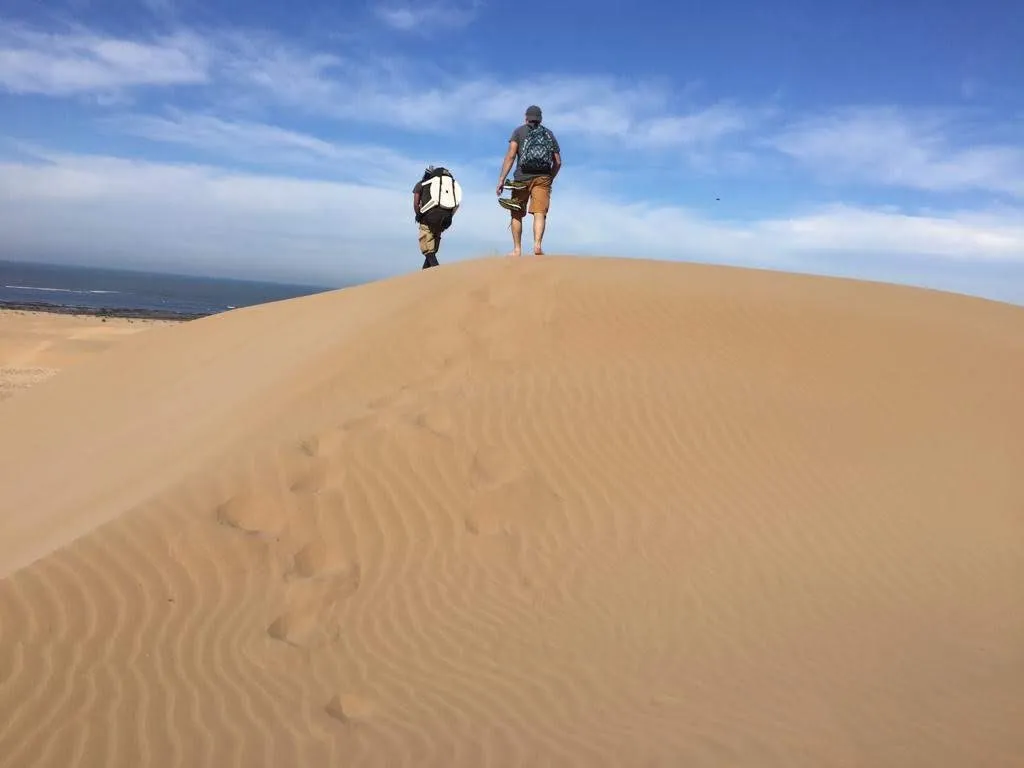
When you talk about mountains around Essaouira, the Amsitten massif almost always comes first. This imposing range stretches over about 30 kilometres, with the highest point in the region at 912 metres. Don’t be surprised if you’re a little out of breath halfway up.
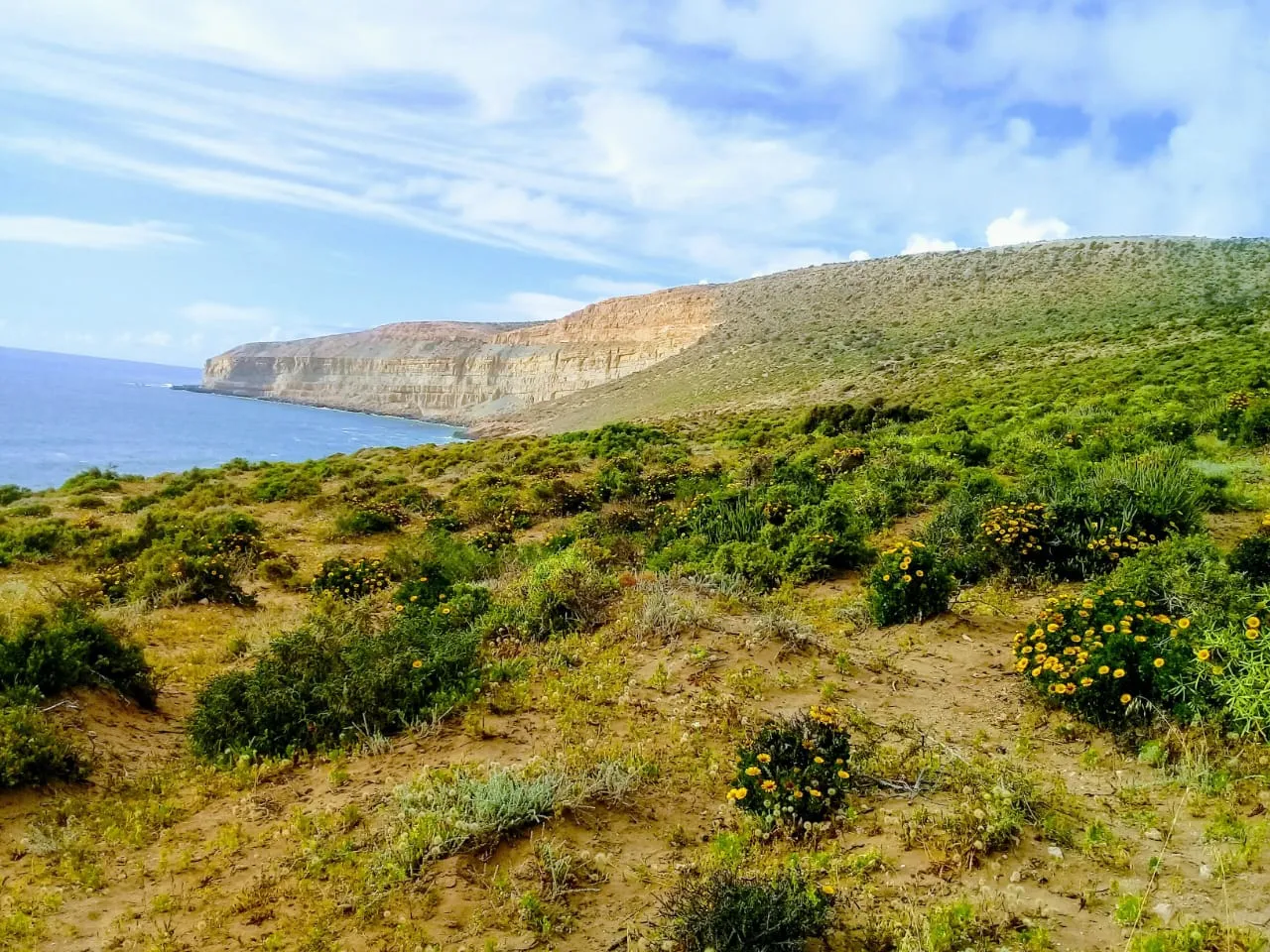
The itinerary usually starts at the village of Smimou, 45 km south of Essaouira. The climb is hard, but the landscapes vary: forests of thuya, argan, carob, oak and juniper — stretches of wormwood, washes of oregano and thyme, the plants of a thousand aromatic and medicinal virtues, knowingly and ancestrally put to use.
Mont Amsitten is a textbook example of the region’s mountain ecosystem, pairing a rich botanical diversity with a semi-arid-to-semi-humid climate.
At its summit stand the remains of an ancient mosque, the exact date of construction unknown. Locals believe it served as a stopover for trade caravans heading to Marrakech, the Sahara or Timbuktu.
At the summit of mont Hassan, a forest ranger is waiting for us for a break. He pours us pure-honey tea, a product of the terroir, extracted by his own hands. The halt is your chance to gather strength.
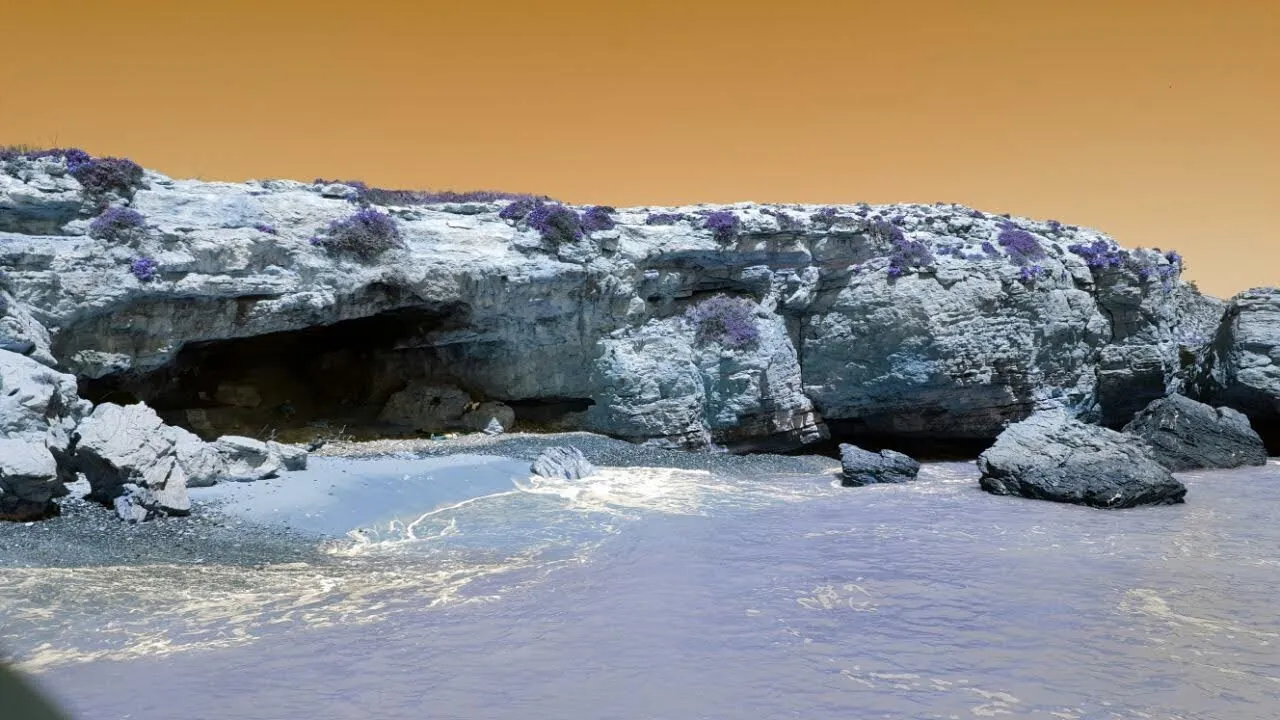
On the way down, descending toward the Smimou salt flats — one of the highlights of the trip — the water in the cisterns shimmers and shifts progressively from earthy tones to the pure white of salt, in harmony with the argan trees and the rocks that form a natural wall, enhancing the beauty, the charm and the grandeur of the place.
The history of salt in this region, its relationship with people and place, reads like a tale from a thousand and one nights — told slowly in a cave, around a tea ceremony and a tajine simmering on a low fire.
For more, read The History of Salt in our Territory section.